Without an H

Photography from south-east Asia by Jon Sanwell

Posts tagged ‘street’

On solid ground

130828-232-edited

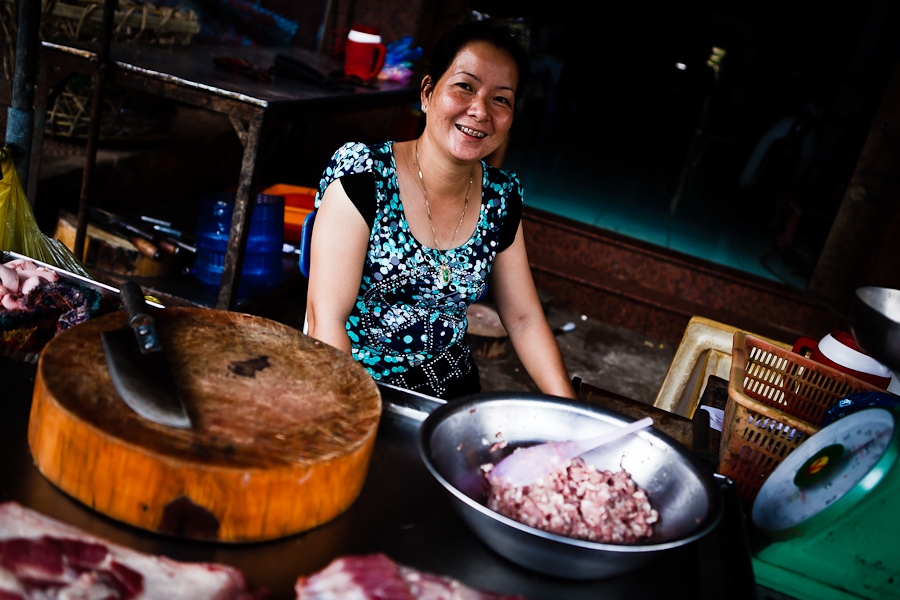
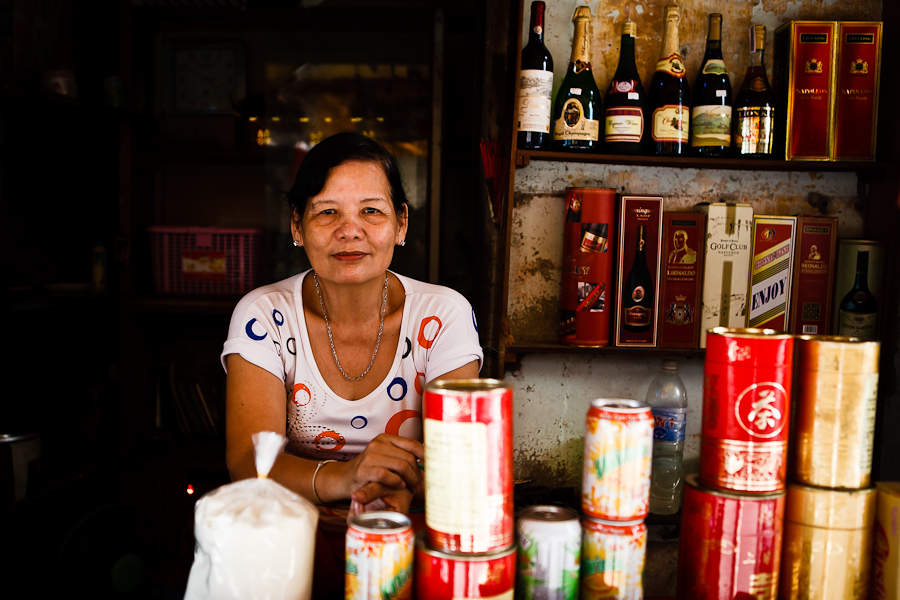
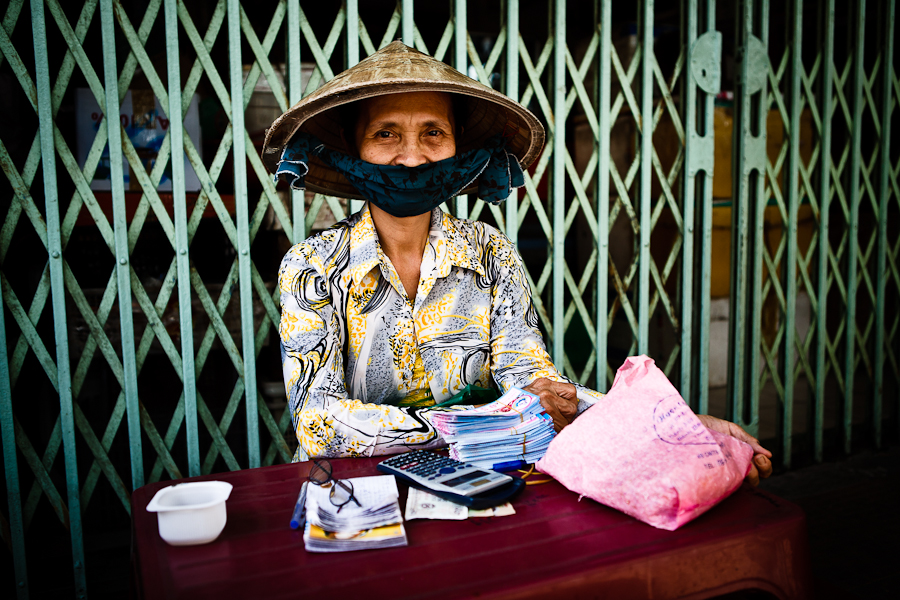
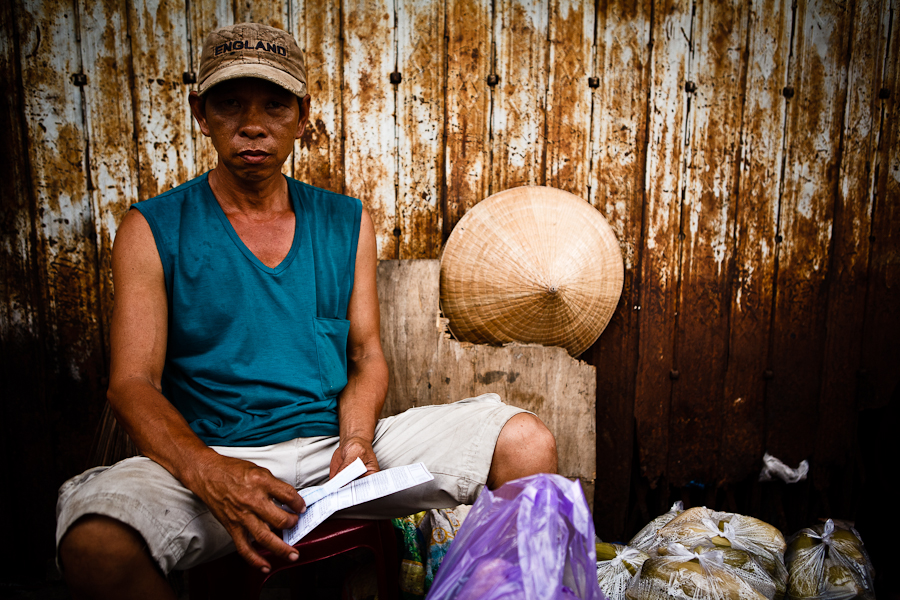
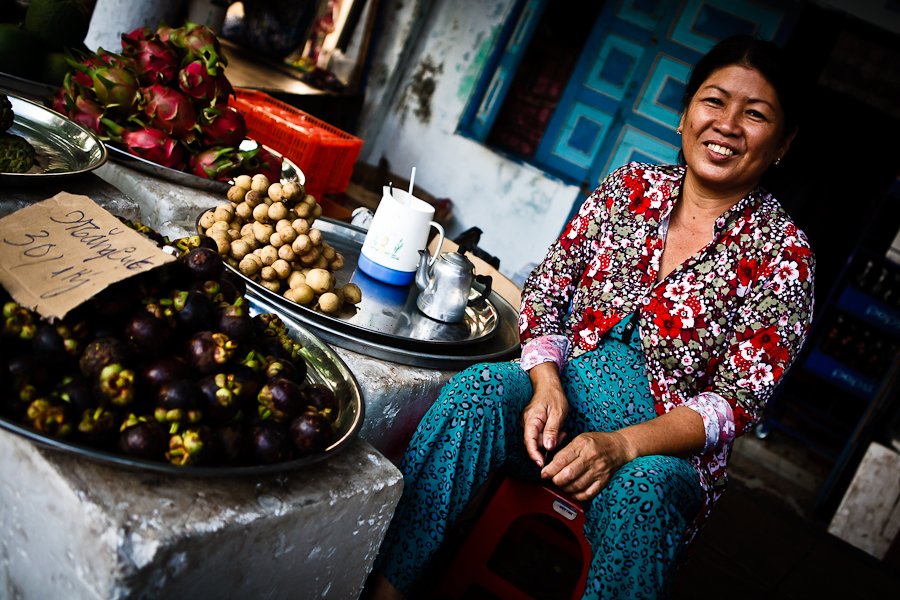
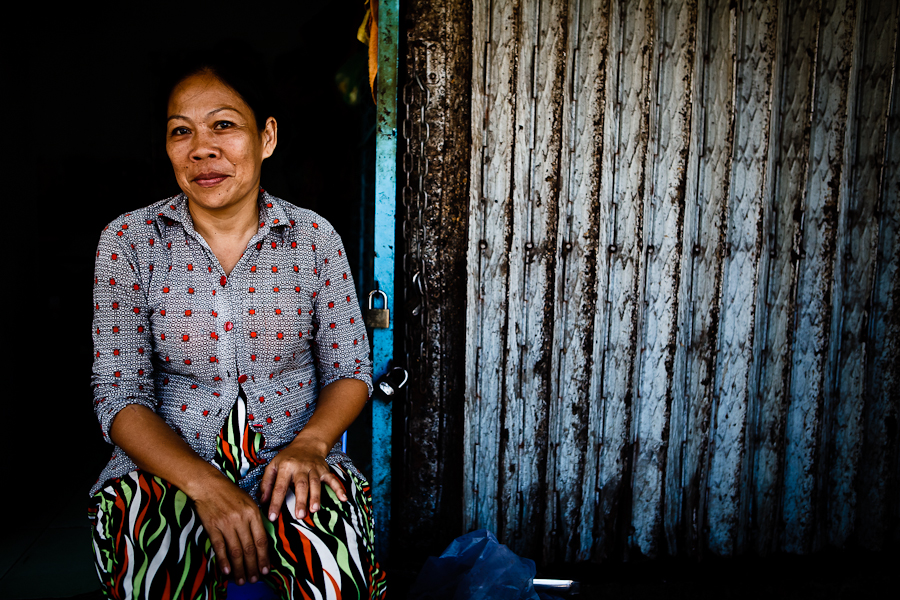
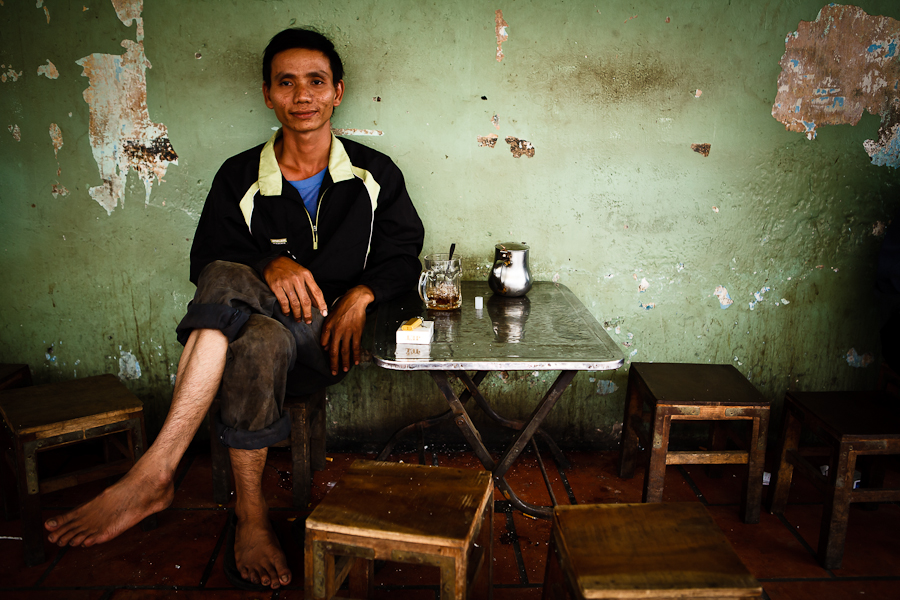
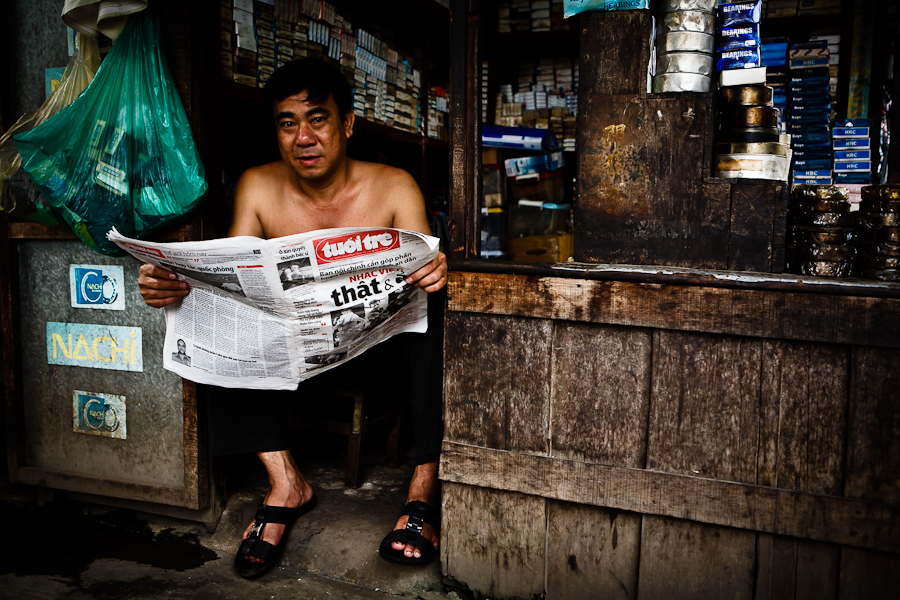
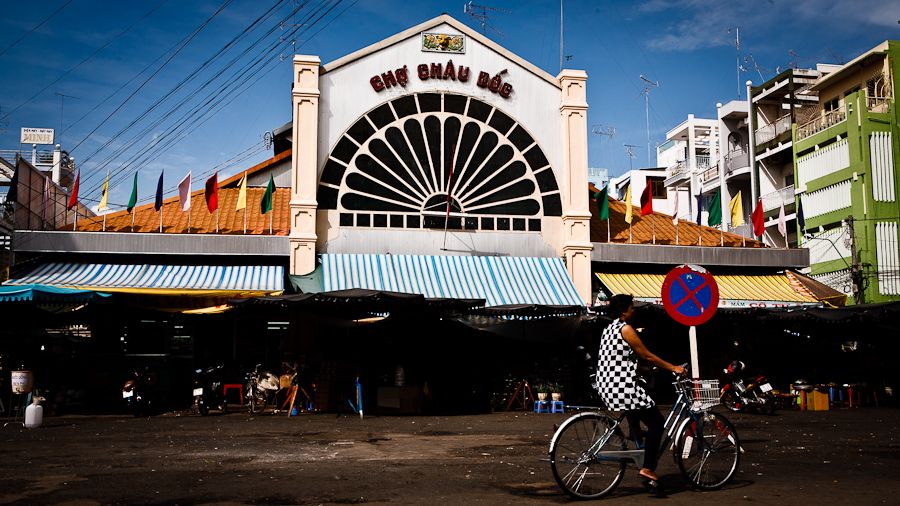
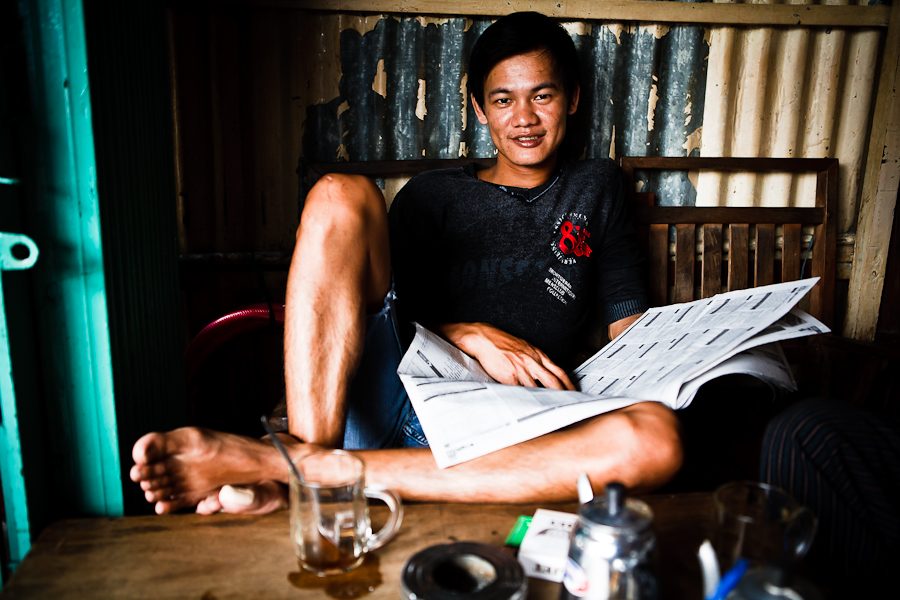
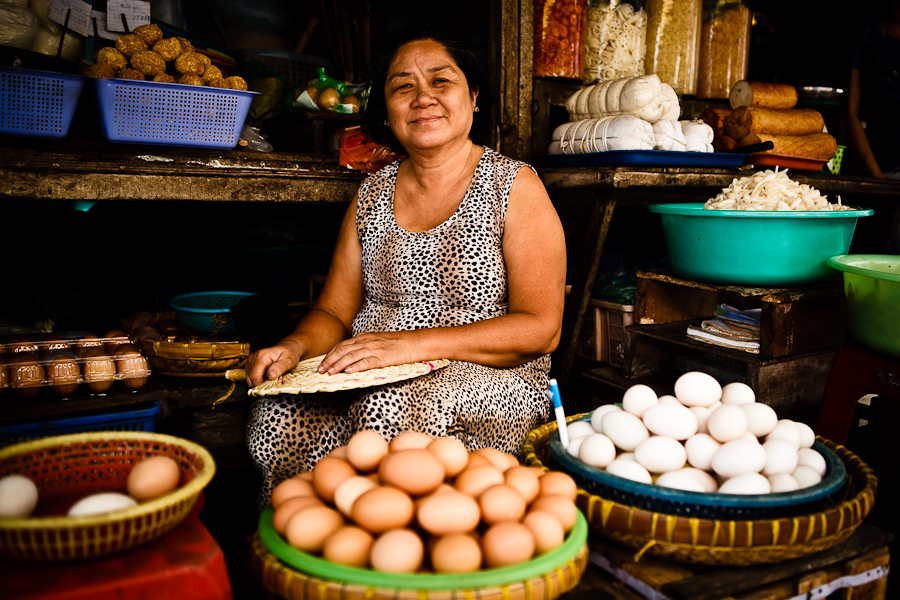
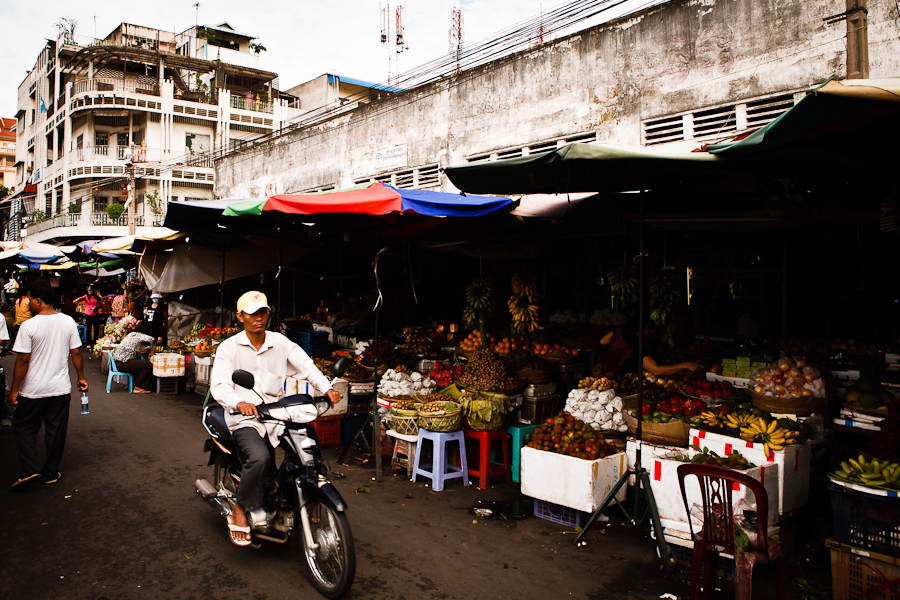
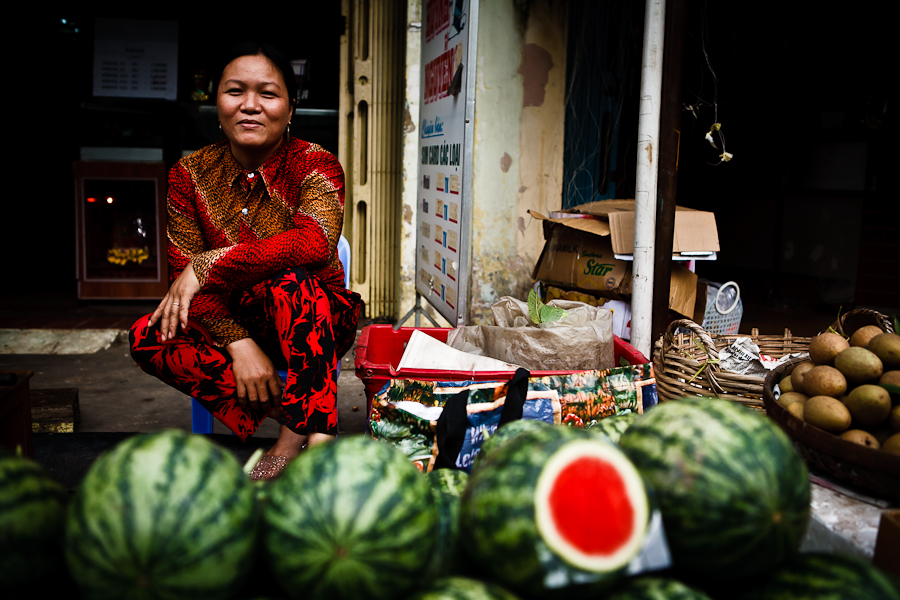
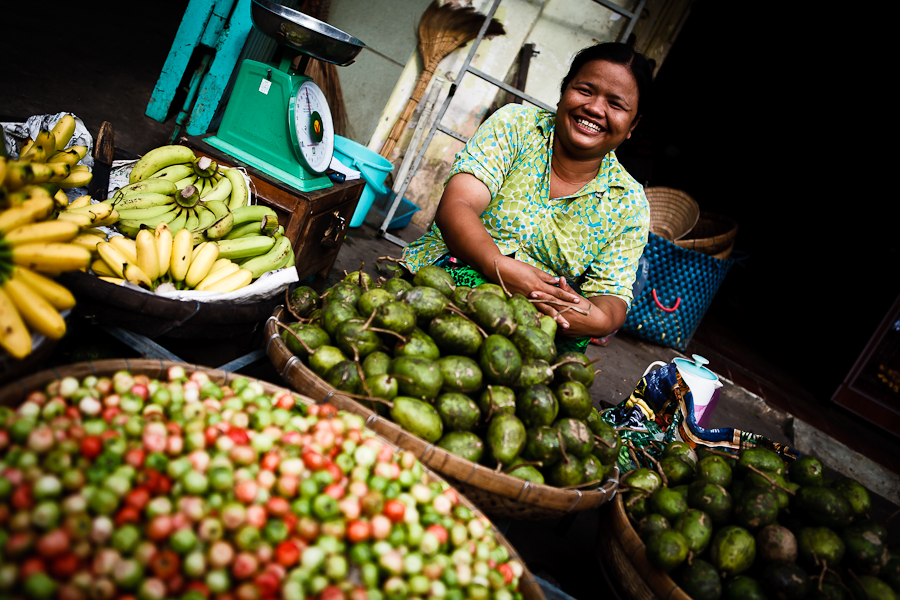
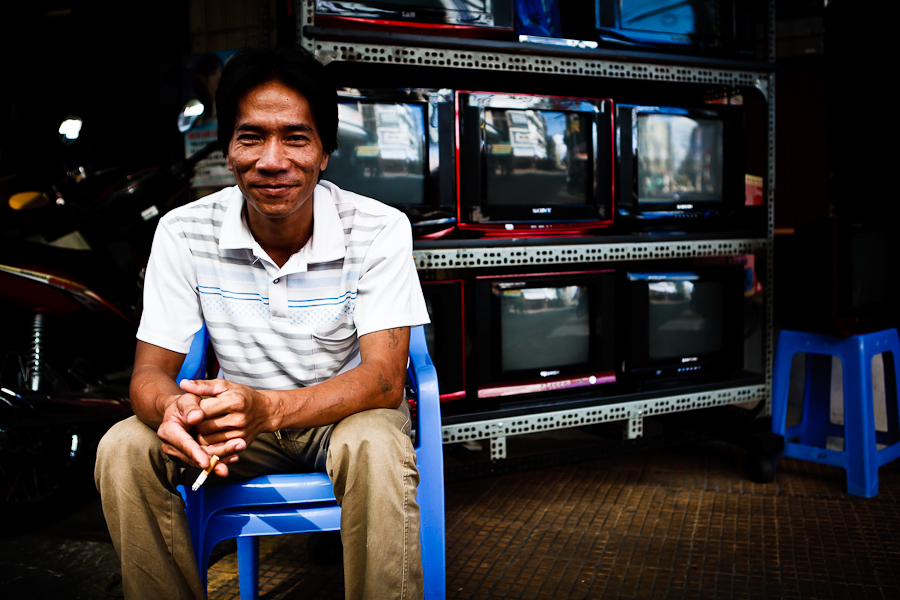
If I could only take pictures in one kind of location, it would be the streets and markets of Vietnam. Can Tho, the main city of the Mekong delta, is best known for the nearby floating markets, but the dry land city streets are where I found the pictures that I like the most. While I enjoyed the experience of visiting the floating markets by boat, I didn’t come back from those trips with the pictures that I wanted. Maybe I’m just more comfortable with solid ground beneath my feet, being able to move where I want, rather than having to make the best of the boat’s position.

I spent a fair amount of time in Can Tho relaxing on the waterfront, watched over by a giant statue of Uncle Ho, but found time in the early mornings and late afternoons to wander the nearby side-streets and markets.  I seem to have been particularly drawn to strong reds, greens and blues during my stay. The original old market building now houses a riverfront restaurant and assorted souvenir stalls, so the market for fresh meat, fish, fruit and vegetables has spilled out onto the adjacent streets.
130828-240-edited

130817-001-edited

130828-277-edited

can-tho-market-portraits

130816-118-edited

130817-012-edited

130828-314-edited

130830-138-edited

130817-032-edited

130828-176-edited

Related posts:

Metal Street

130828-220-edited

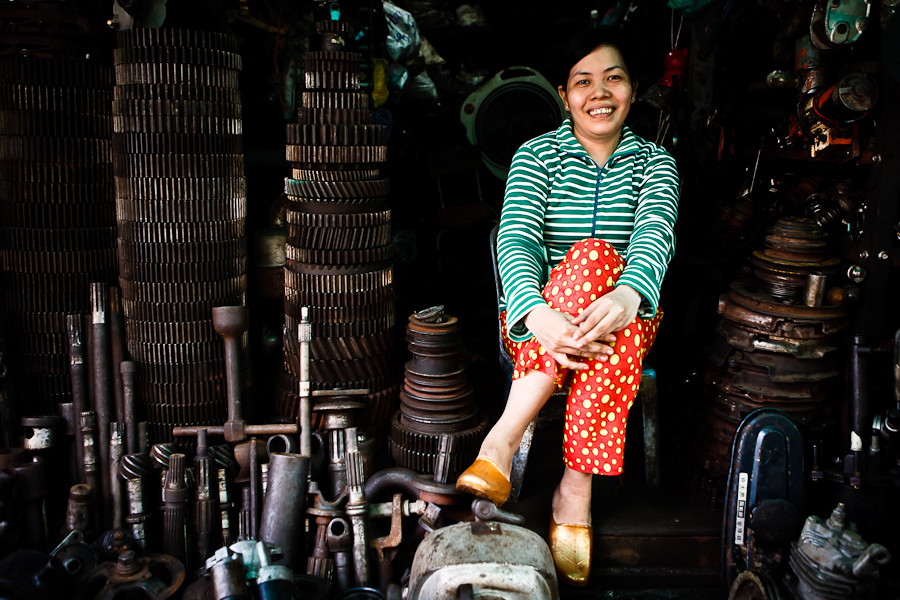
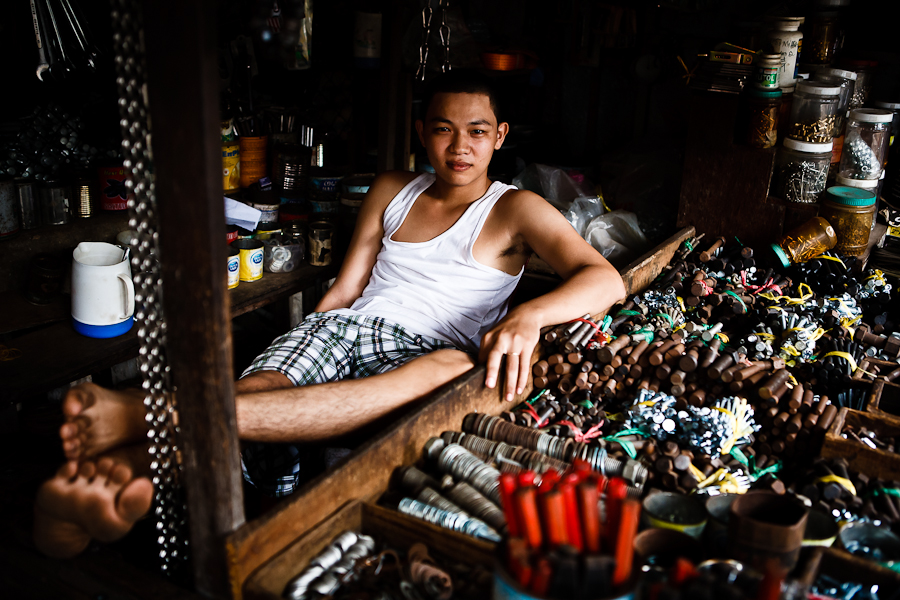
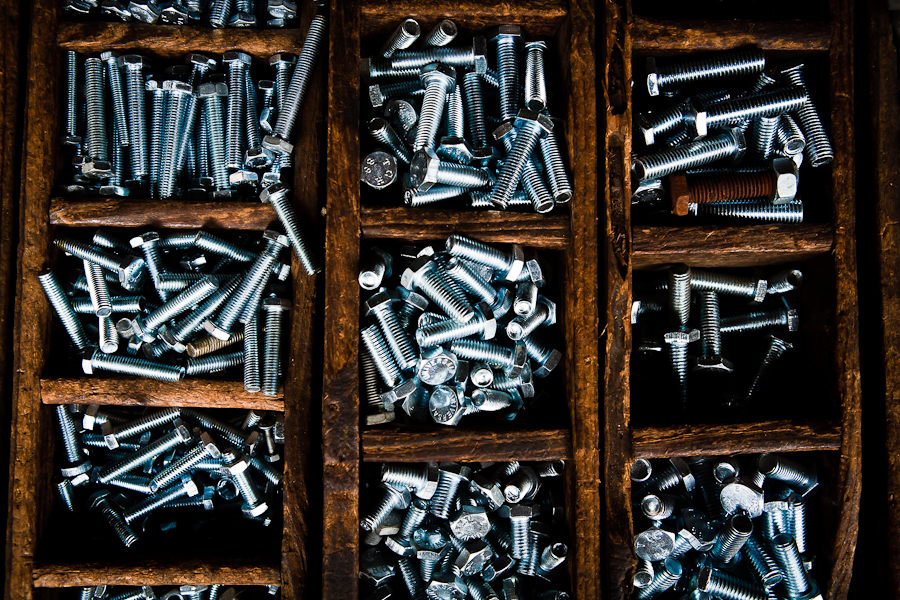
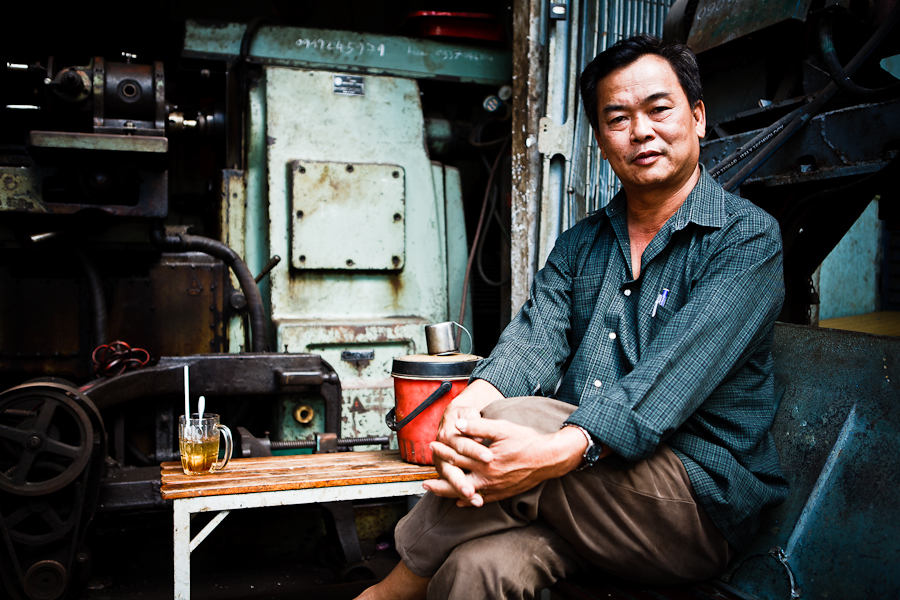
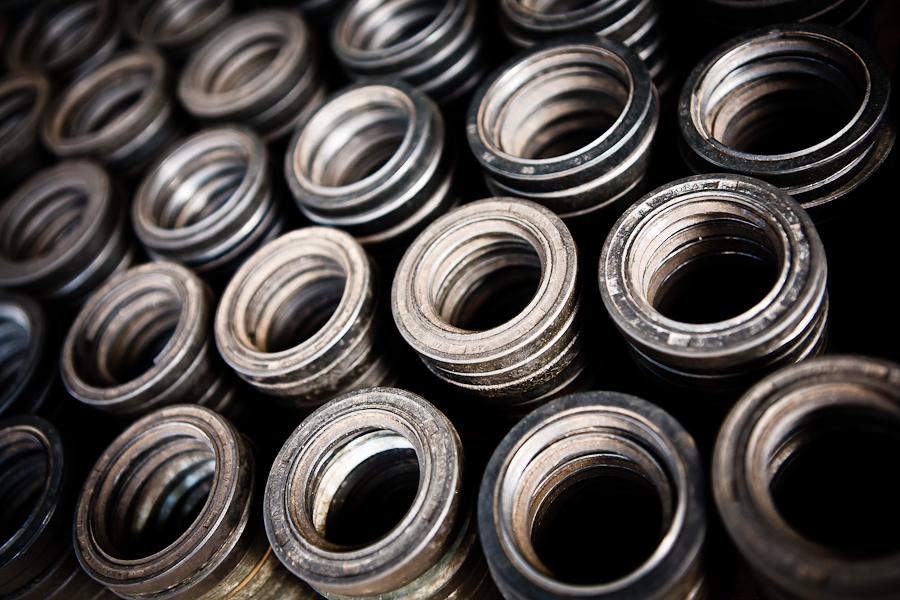
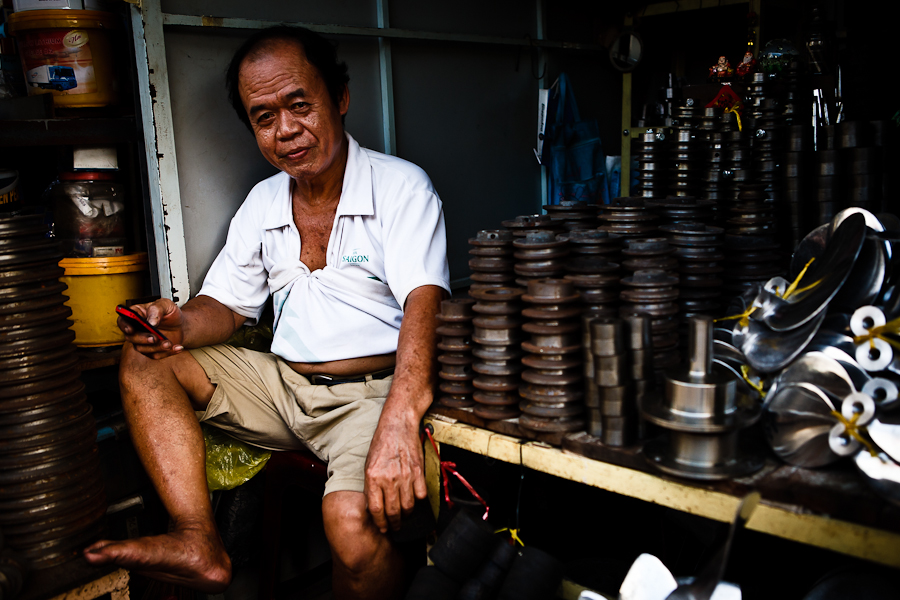
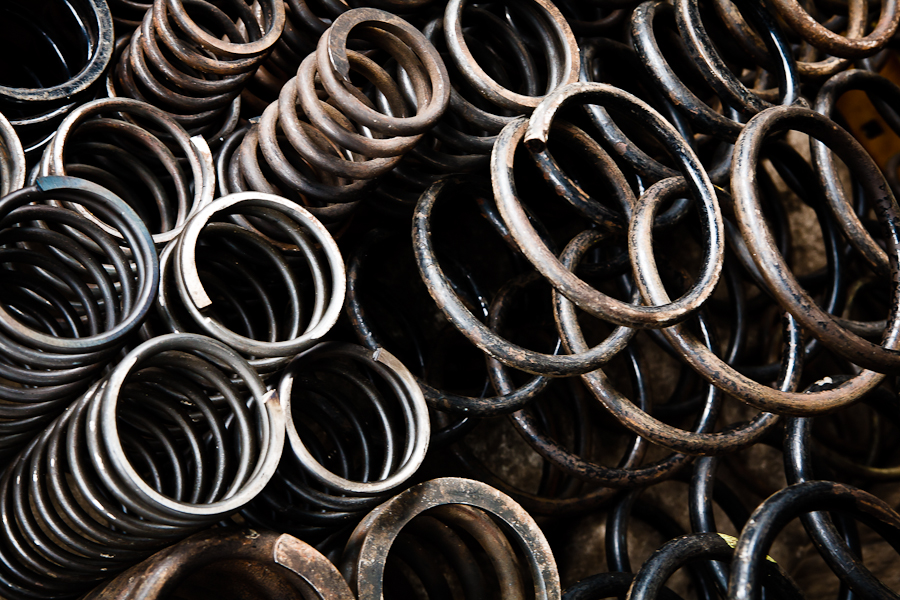
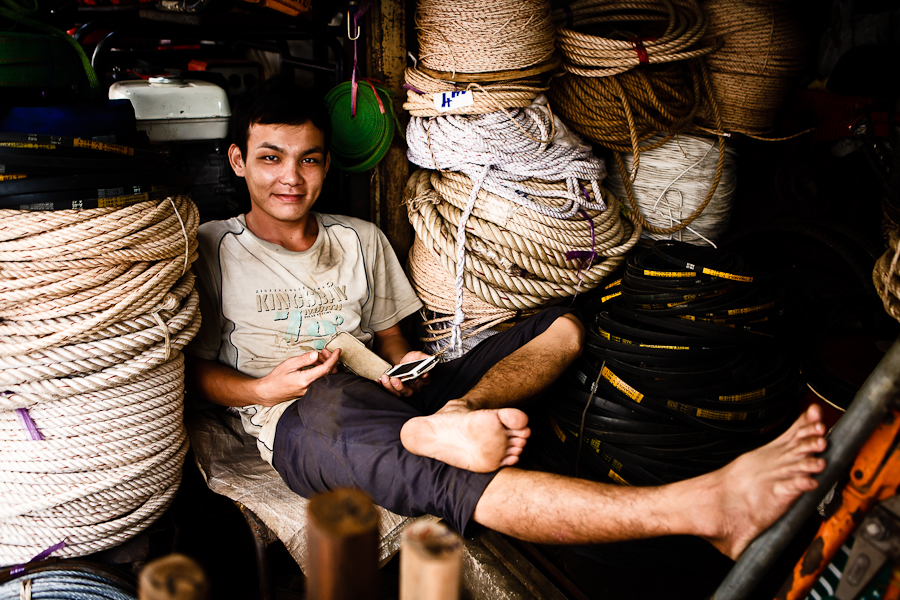
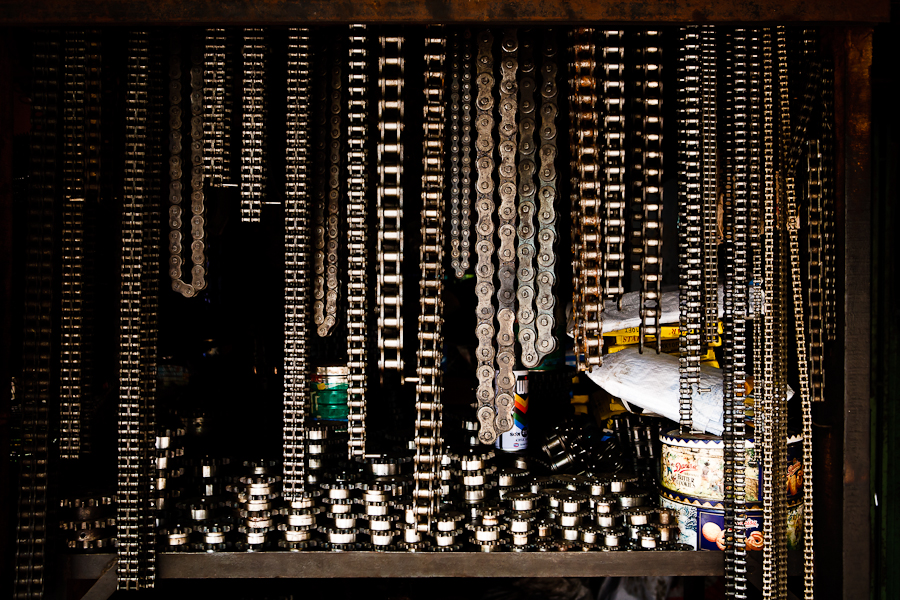
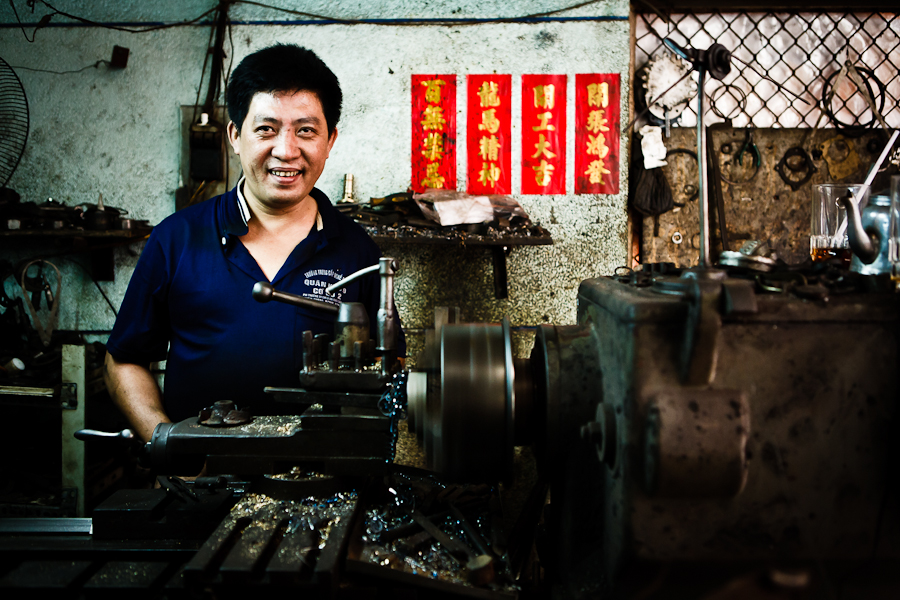
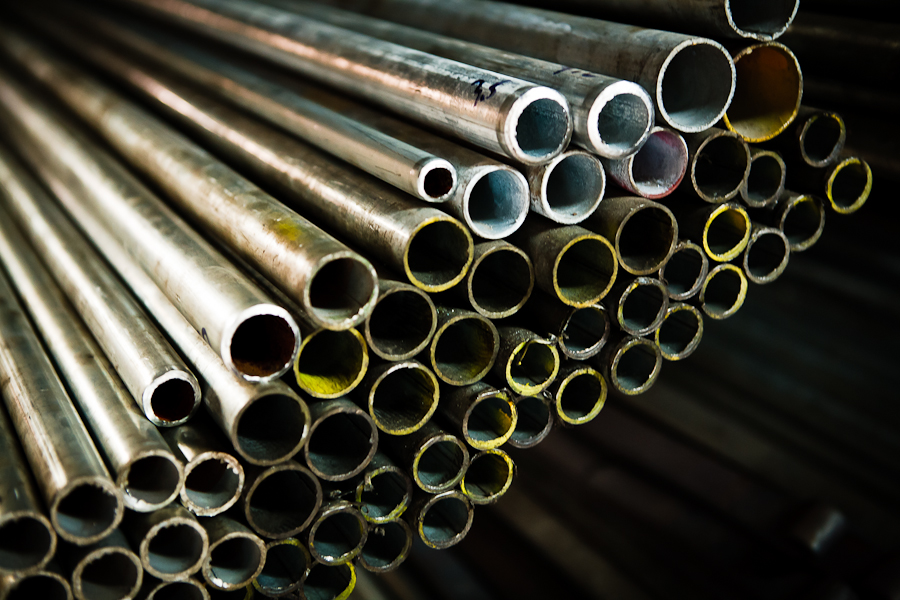
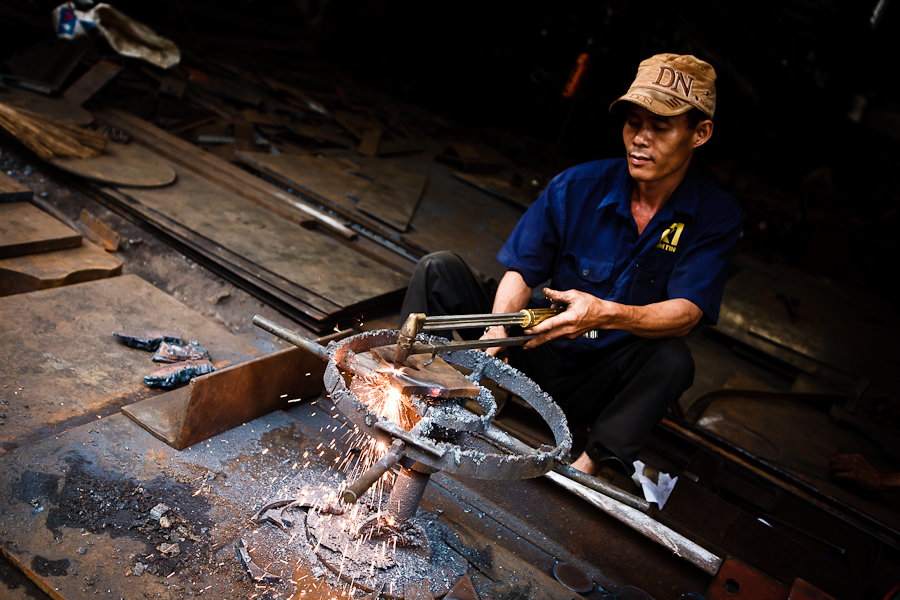
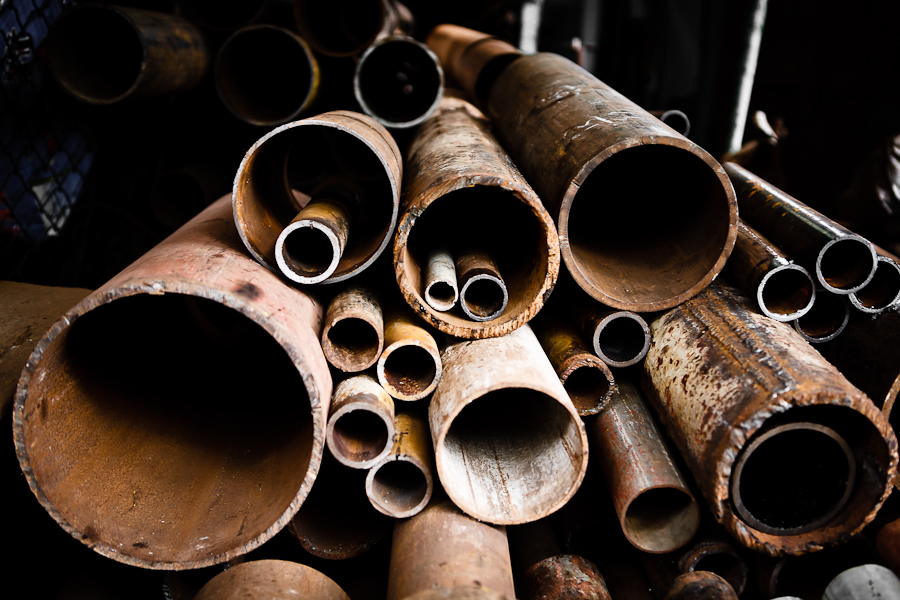
Every town and city in Vietnam has at least one metal street, where you can buy engine parts, rivets, girders and other metal things I don’t know the names of.  Can Tho’s metal street is actually two fairly short, very narrow intersecting alleyways, a stone’s throw and a million miles from the scenic waterfront. Sparks fly. Buzzing and clanging sounds fill the air.  Tiny, cramped booths offer all manner of hardware for sale, and men – it’s nearly all men – saw, weld and solder in open-fronted workshops.

130828-135-edited

130828-138-edited

130816-049-edited

130816-078-edited

130816-087-edited

130828-061-edited

130828-004-edited

130828-064-edited

130828-034-edited

130828-089-edited

130828-094-edited

130828-101-edited

130828-168-edited

130828-121-edited

130828-208-edited

Related posts:

Checkmate

130817-053-edited

I could post a whole series of pictures of men playing checkers in the street – and perhaps I will at some point – but for now, here’s just one photograph from Can Tho.

Streets of Chau Doc

130804-239-edited

Don’t tell everyone, but Chau Doc is one of the finest places in Vietnam. Near the Cambodian border, it’s a riverside market town with a mix of Vietnamese, Khmer and Cham people. The buzz about the town is recognisably Vietnamese, but is tempered by a distinctly Cambodian laidbackness.

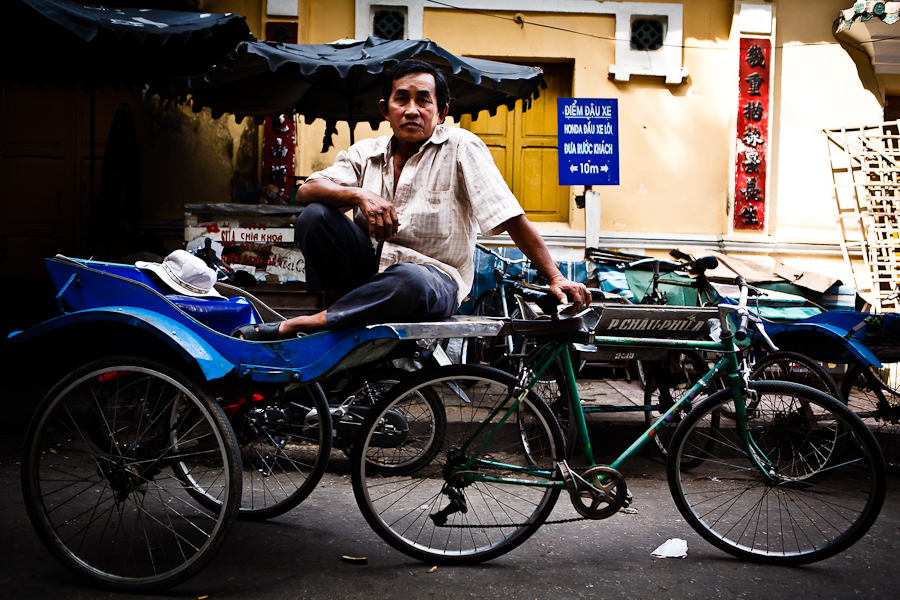
You can taste the blend of cultures in the food. The town’s signature dish, bun ca (a fish noodle broth, sold in Saigon as bun ca Chau Doc) is Vietnamese street food with a Cambodian twist. I ate some every day. Cyclos are a common sight and, unlike in Ho Chi Minh City and Hanoi, where they are now mainly the preserve of newly arrived tour groups, in Chau Doc they are commonly used by local people as a way of getting from A to B.
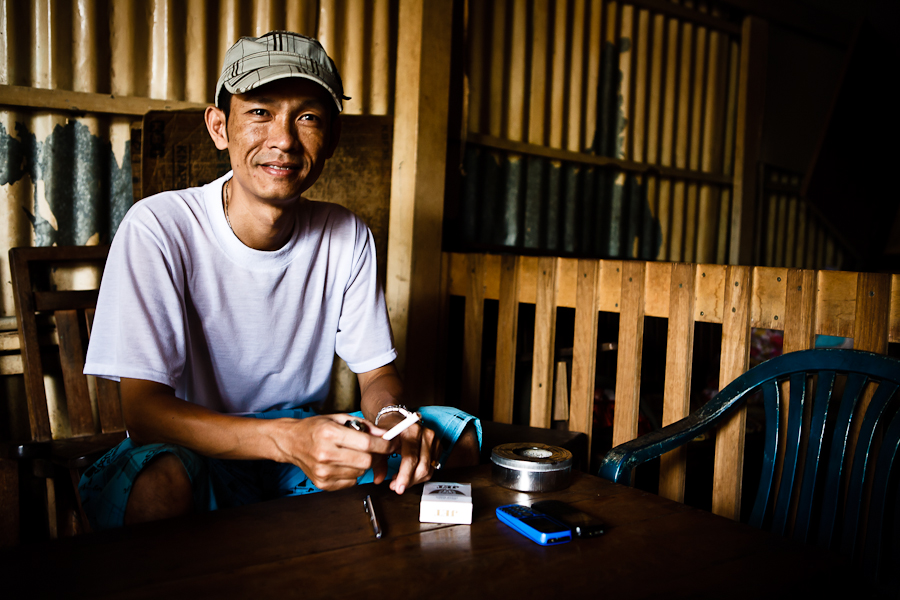
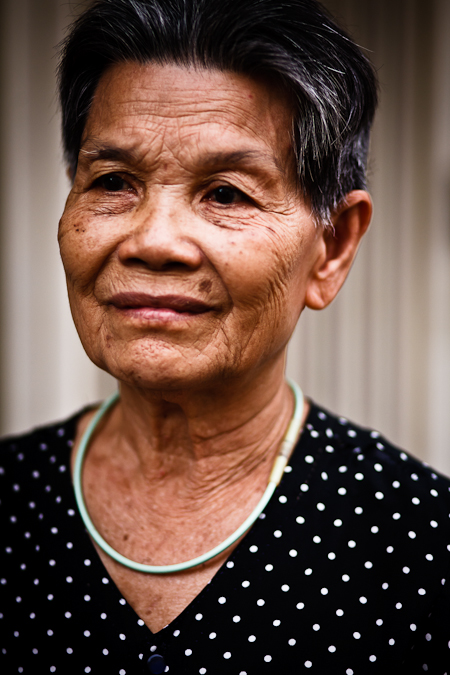
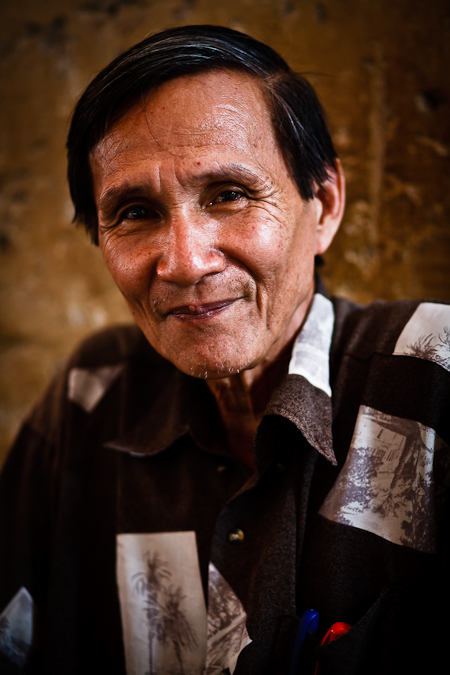
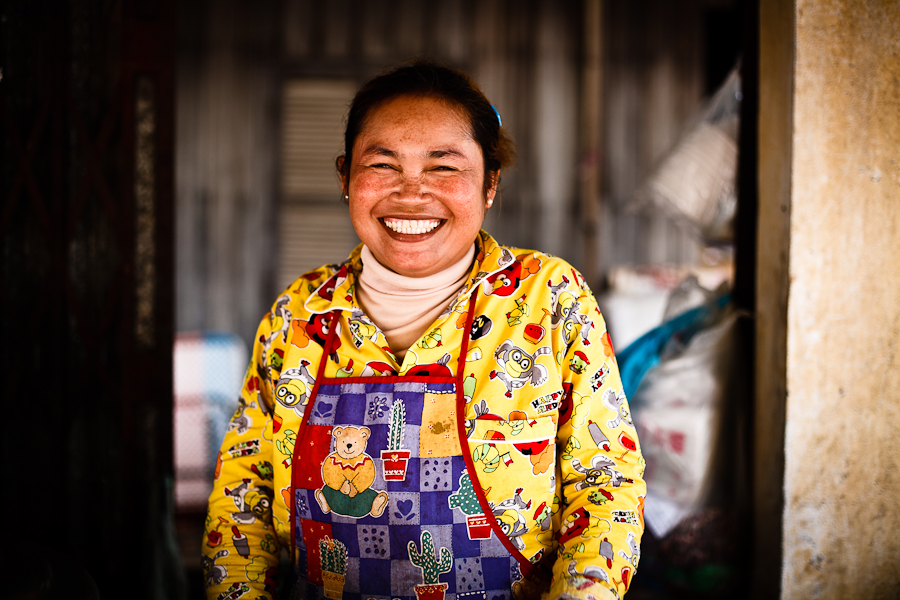
In some places, you have to work quite hard to get people pictures, but not in Chau Doc, where the people are some of the warmest and most hospitable that I’ve come across. I’ll be posting some more pictures soon; this first post concentrates on the people in the market and on the streets.

130804-260-edited

130805-086-edited

130806-144-edited

130804-574-edited

130805-202-edited

130805-131-edited

130804-370-edited

130804-587-edited

130804-412-edited

130805-016-edited

130804-105-edited

Related posts:

The Phnom Penh Experience

130729-104-edited

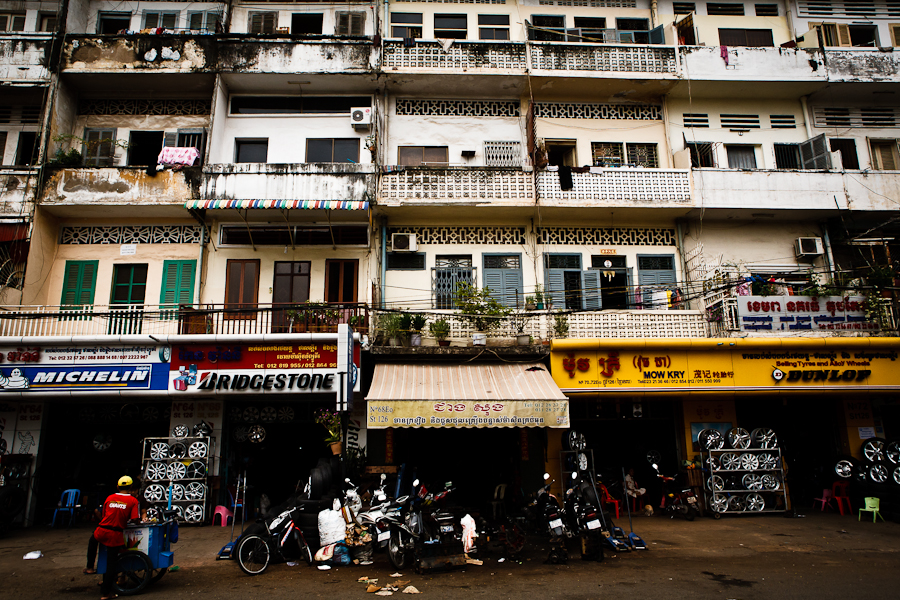
Phnom Penh was the biggest, busiest, liveliest place I’d been in for a while.  For most of this Mekong trip, I’ve been staying in small-ish market towns, with occasional detours into more rural areas.  The only cities I’d been in since leaving Saigon in May were Kunming and Vientiane, neither of which have anything like Phnom Penh’s energy or attitude.  Suddenly, the streets were full of traffic, the air full of noise and fumes, and the pavements lined with eager tuk-tuk drivers. After the agreeable drowsiness of Kratie and Kompong Cham, it was a mild shock to the system.  None of which is to say that I didn’t enjoy myself in Phnom Penh. It’s a place that I always enjoy visiting, and I can imagine myself living there one day.

I’m always impressed and a little awed by the city and its people; when you consider that thirty-odd years ago the place was deserted, its population forced into the countryside by the Khmer Rouge, it’s a wonder that the city functions at all, let alone that it’s a place of so much colour and life.  Now the Khmer Rouge years are part of the tourism industry.  Visitors can go to Tuol Sleng, the harrowing genocide museum, and then, slightly grotesquely, to a shooting range to fire AK-47s, all in the same afternoon.

I sometimes think that it’s a shame that Pol Pot and his henchmen play such a big part in many people’s Phnom Penh experience.  I’m not saying that Cambodia’s recent history should be ignored or forgotten, but present-day Phnom Penh has a lot going for it, and we should celebrate that as well as paying respect to its past.  So in that spirit, the pictures in this post are all about the street life of Phnom Penh today, rather than Tuol Sleng and the Killing Fields.  For those wanting to know more about the history, there are some links at the bottom of the page.

130729-019-edited 130729-080-edited 130729-032-edited 130729-058-edited 130729-067-edited 130729-068-edited 130729-089-edited 130729-093-edited 130801-054-edited 130801-025-edited

Related posts:

From elsewhere on the web:


Phnom Penh street portraits

130802-045-edited

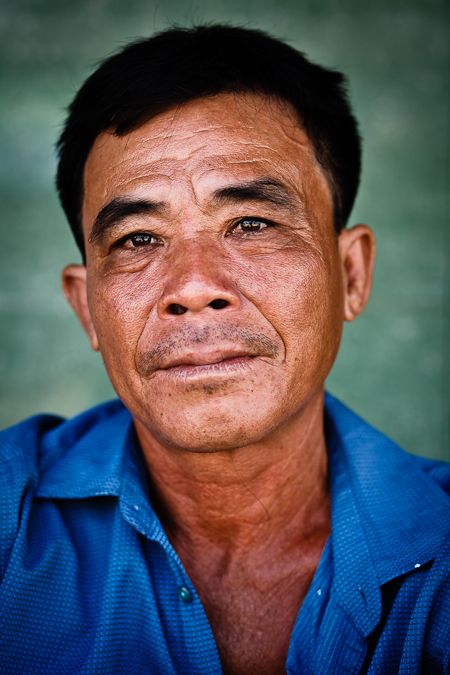
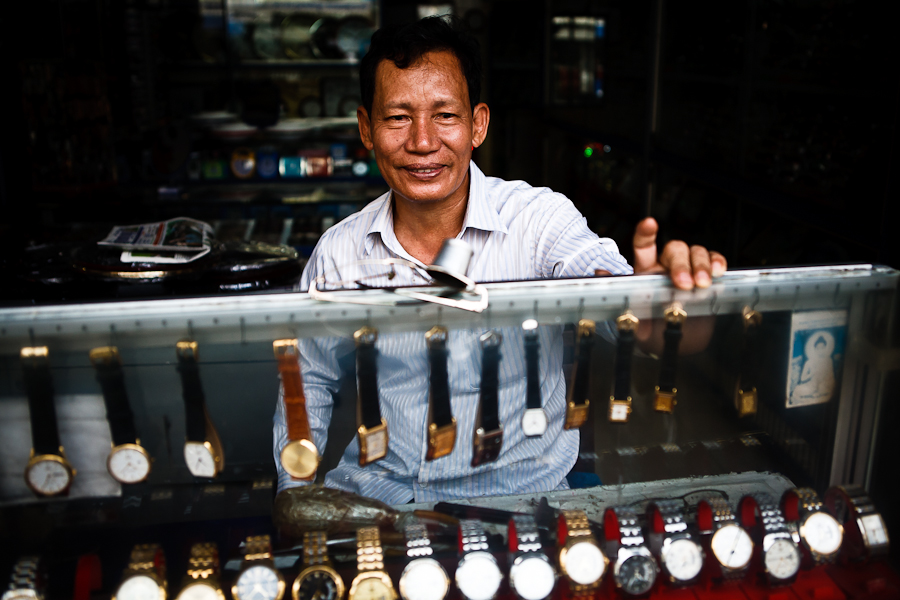
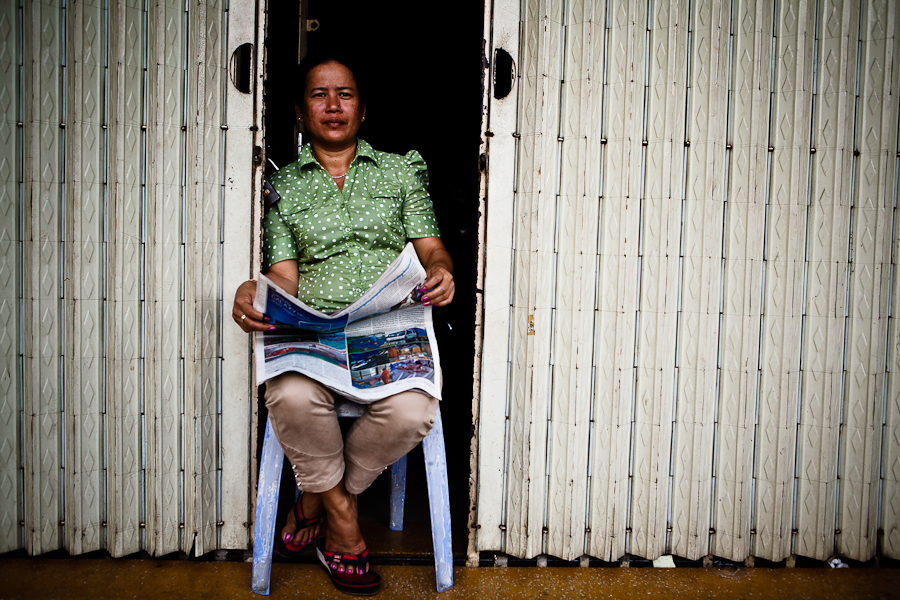
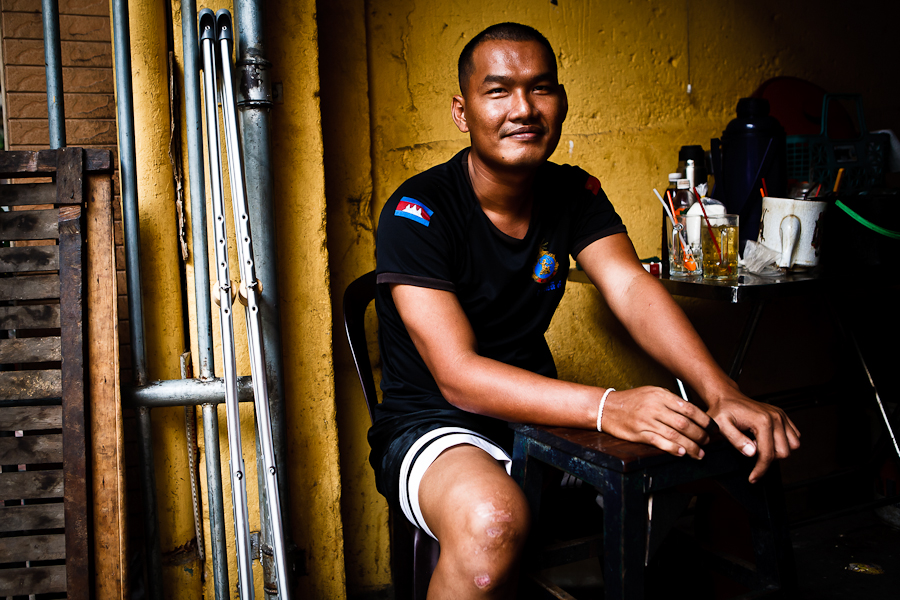
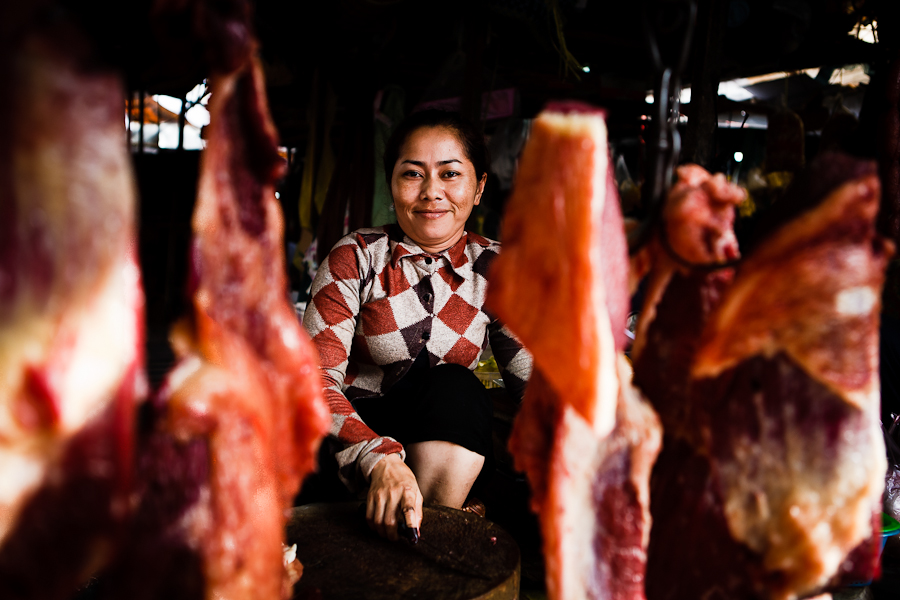
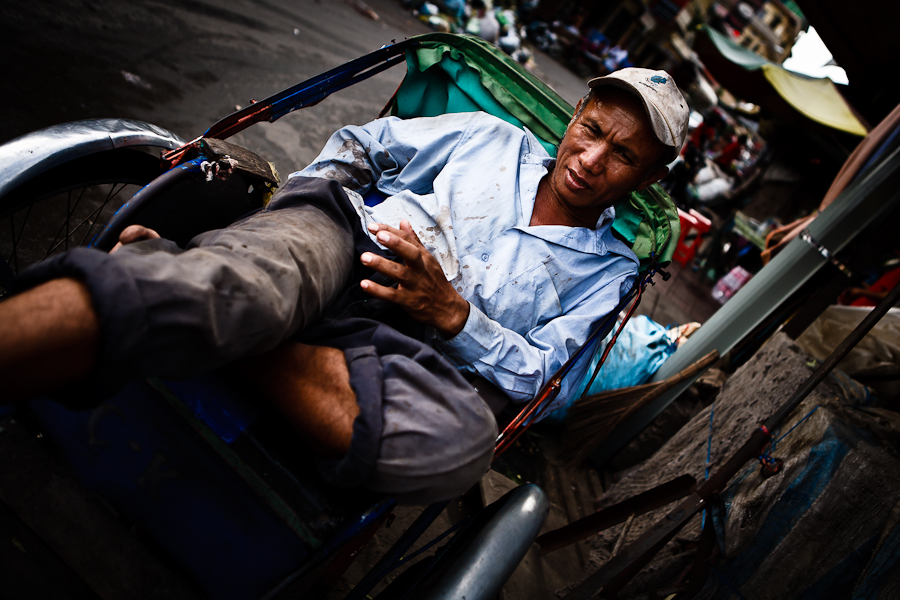
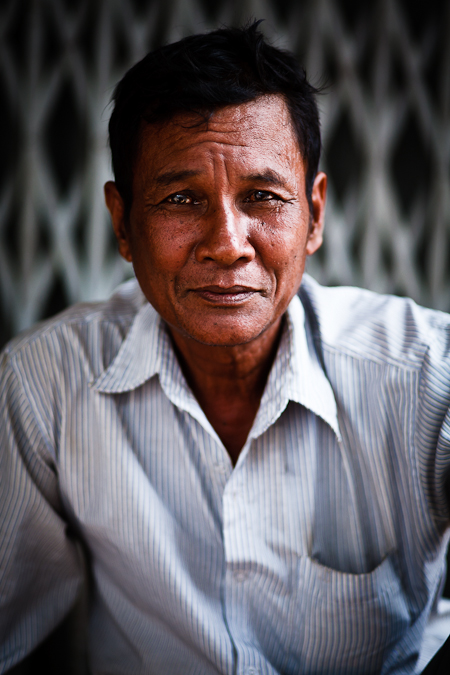
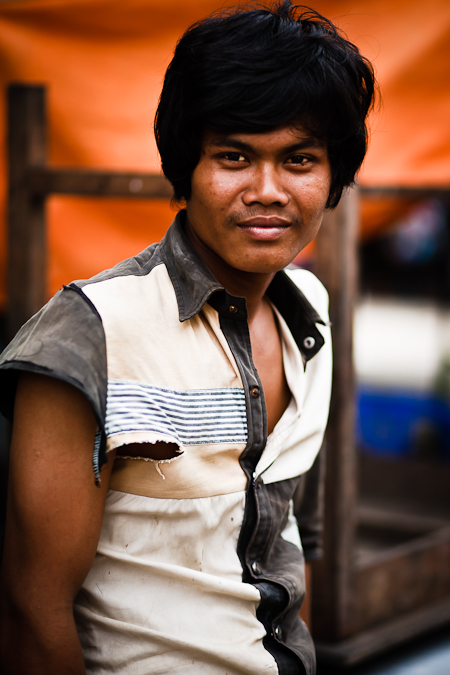
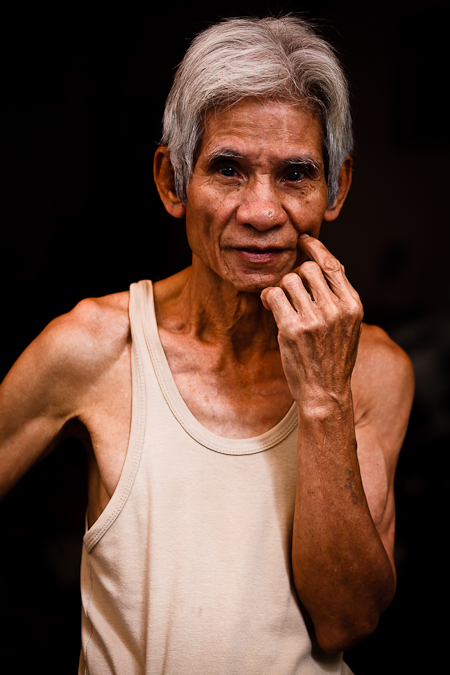
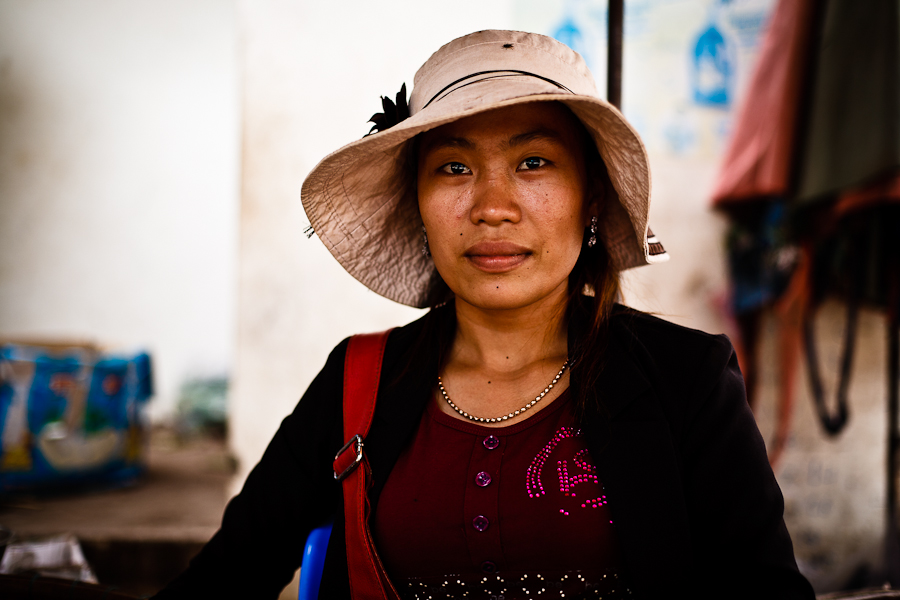
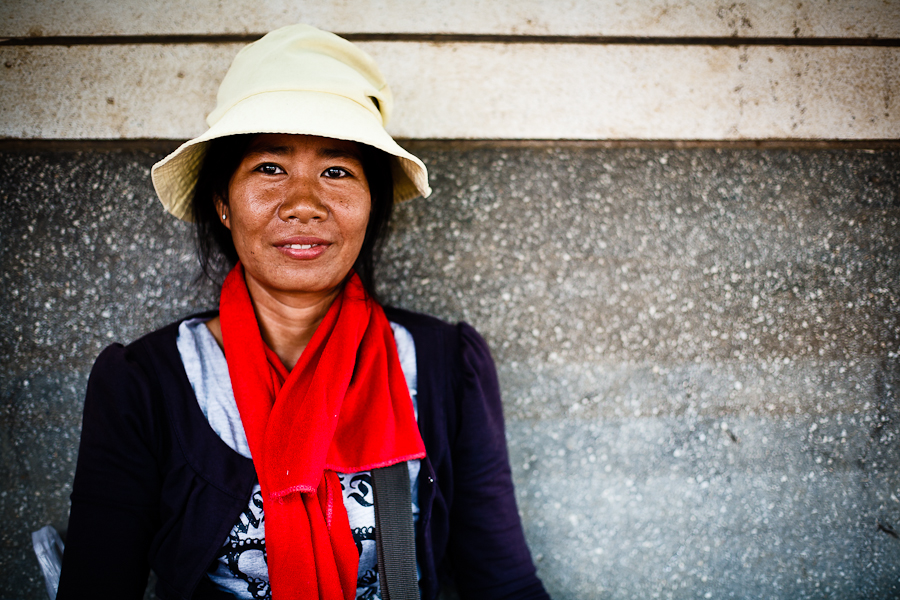
Sometimes it’s best to keep things simple.  There’s so much happening on the streets in Phnom Penh, especially compared to the much quieter towns that I’d been visiting previously, that it can be hard to take it all in.  After a few days in the city, I stopped trying to take the definitive Phnom Penh photograph, and instead concentrated on looking for interesting faces in nice light.  So I spent my last afternoon there wandering the streets and alleys around O Russei market, taking some simple portrait pictures with my (to give it its full name) sadly neglected 85mm lens.

130802-046-edited

130802-038-edited

130802-060-edited

130802-035-edited

130802-011-edited

130802-007-edited

130802-004-edited

Related posts:

Back in Kratie

130717-008-edited

When I first visited Kratie, in January last year, the place looked very different.  A fire had recently destroyed the town’s market so the traders had had to set up temporary stalls along the riverfront.  Now, the market has been rebuilt and is thriving again, and the view of the Mekong from the town is happily unobscured.  I had good memories of Kratie from my first visit – I kept recalling meals I’d eaten there, pictures I’d taken, the book I was reading – so I was pleased to see that the town had been revived.  On top of that, it was also good to be somewhere familiar again, for the first time since leaving Vientiane a few weeks earlier.

My previous visit was part of a trip I took during the Tet holiday 2012, when I travelled from Saigon, through the Mekong delta, and into eastern Cambodia:  my Mini Mekong Trip, as I now think of it.   At the time, I wrote about how one day I wanted to go on a longer Mekong journey, following the river from southern China to the delta in Vietnam.  And this is what I’ve been doing for the last couple of months: my Big Mekong Trip, now sadly nearer its end than its beginning.

I’ve mostly been using my standard zoom lens on this trip, but in Kratie’s streets, I brought out my 50mm.  I wanted to get some simple portraits and detail shots.  I love taking people pictures with my 50mm lens; it makes you get close to people but still allows your subjects some room to breathe.

130716-009-edited

130716-028-edited

130716-032-edited

130716-046-edited

130716-078-edited

130716-080-edited

130716-088-edited

130716-106-edited

130717-017-edited

130717-025-edited

130717-032-edited

Related posts:

Tracks

hanoi-railway-tracks-1

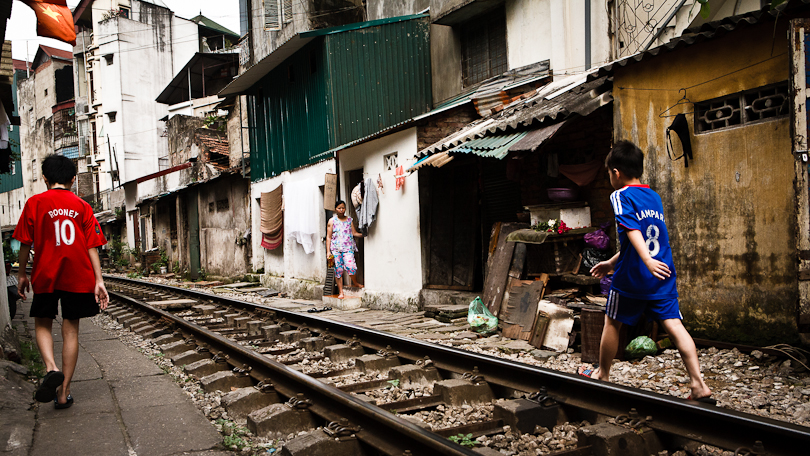
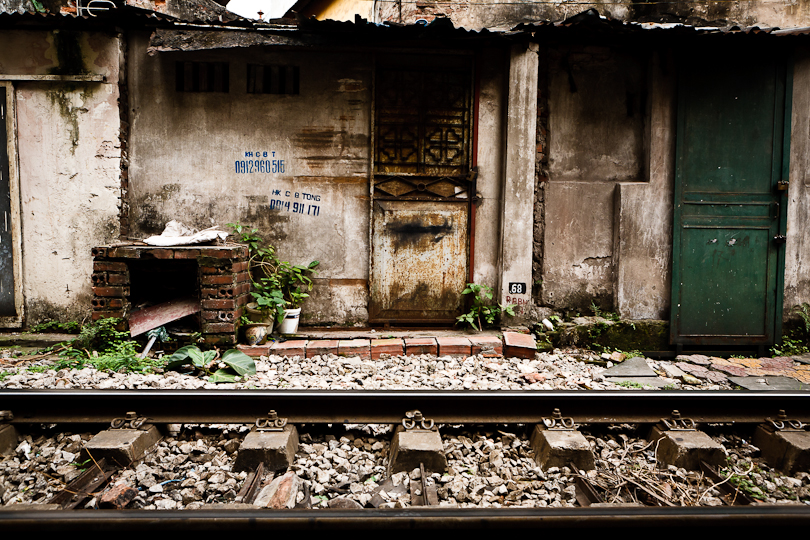
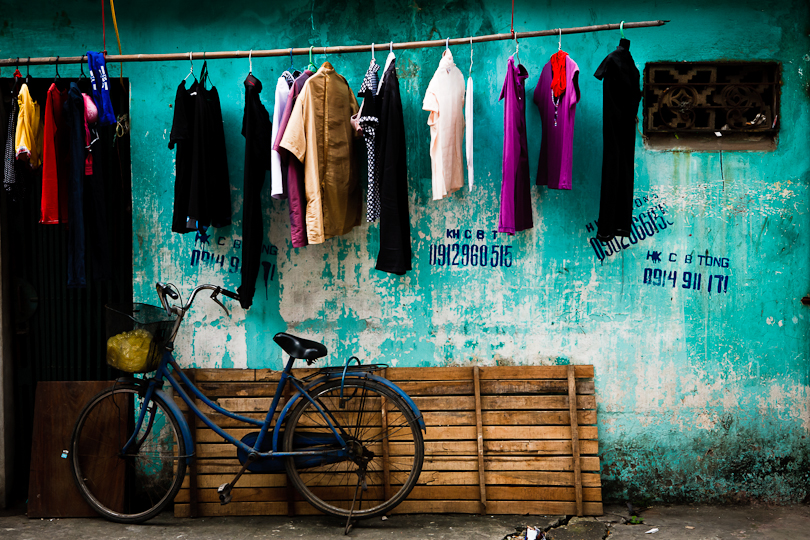
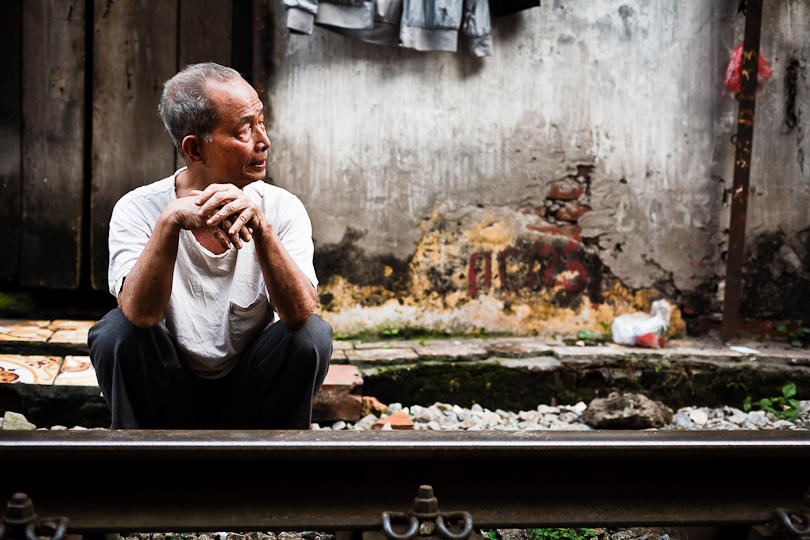
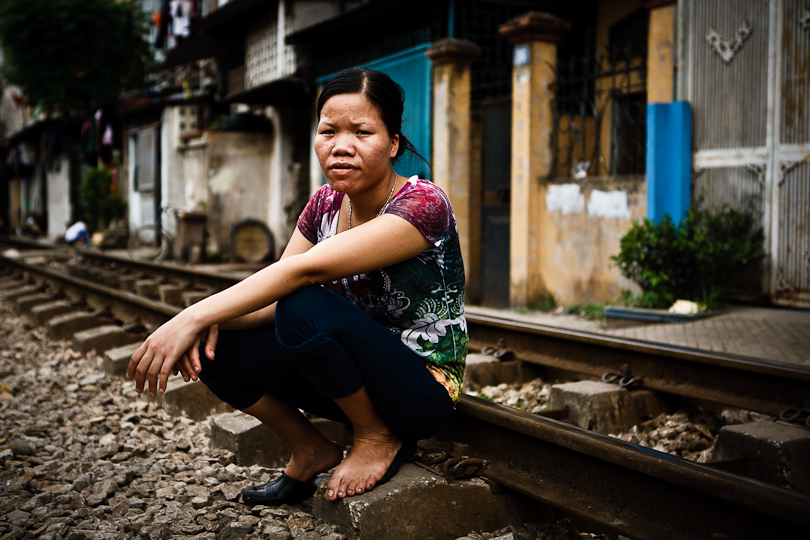
Last weekend, while visiting Hanoi for a few days, I took a short walk along the stretch of railway track that leads from Hanoi station, over Long Bien bridge and out to the north.  I followed the tracks across the busy city streets near the station, then through a quiet neighbourhood, and above a local market.  Space is tight; houses open directly onto the tracks.  Trains are fairly infrequent so, as in any other Hanoi neighbourhood, people go about their everyday business in the streets outside their homes.

hanoi-railway-tracks-14

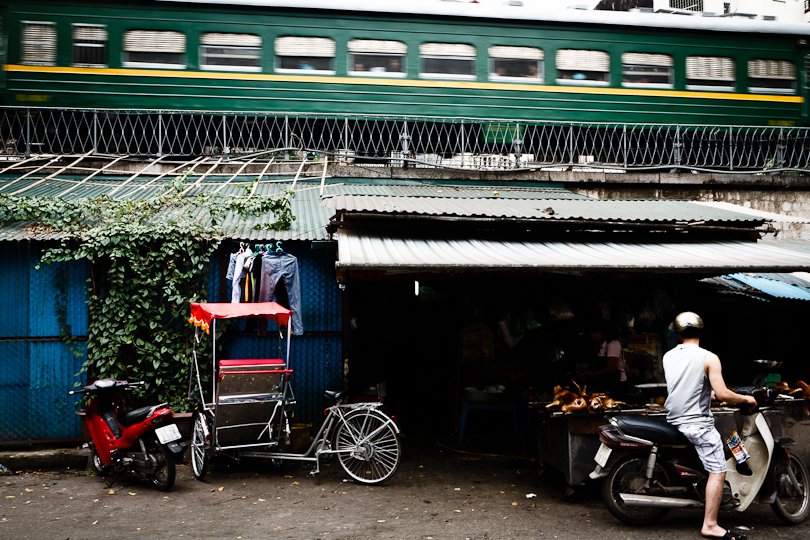
As the railway heads gently up and towards the bridge, there is little room for the market stalls underneath.  Here, dog meat is being sold as a train passes overhead.

hanoi-railway-tracks-5

Wayne and Frank were out looking for trouble.

hanoi-railway-tracks-7

hanoi-railway-tracks-6

Other forms of transport are available.

hanoi-railway-tracks-9

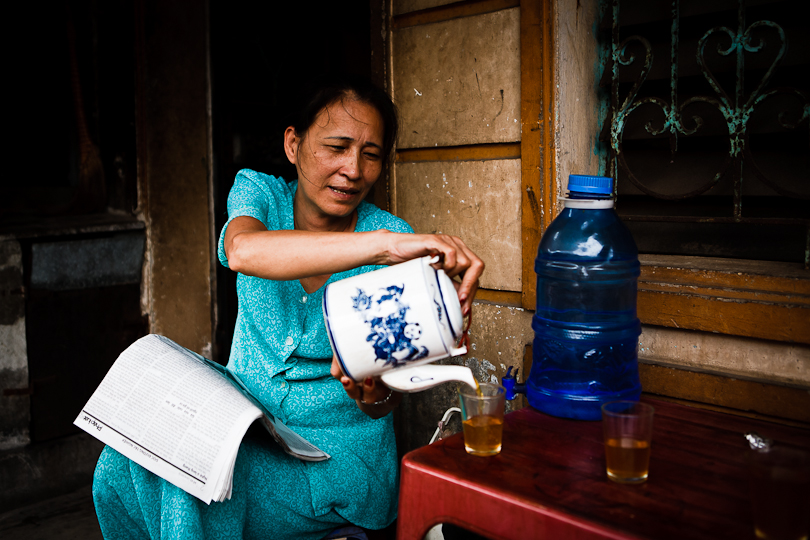
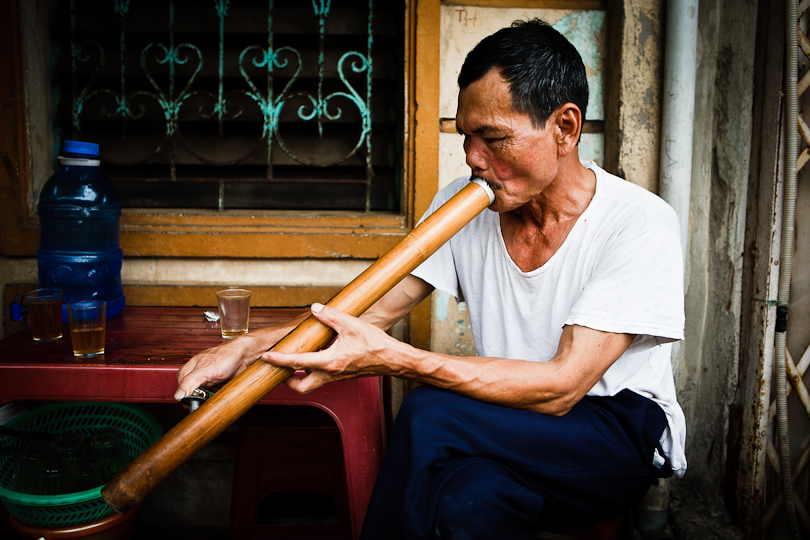
I stopped for a cup of tea…

hanoi-railway-tracks-8

… which this nice man insisted on paying for.

hanoi-railway-tracks-10

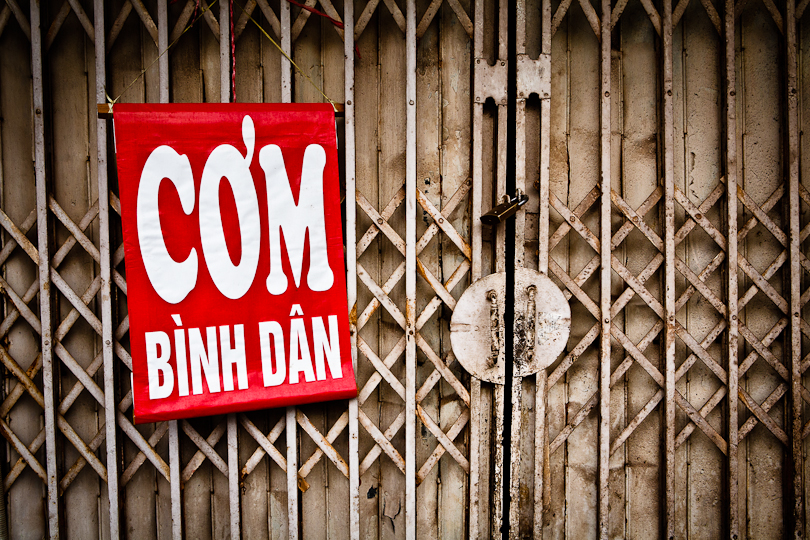
Unfortunately, I was too late for lunch; the com binh dan was already closed.

hanoi-railway-tracks-2

hanoi-railway-tracks-4

hanoi-railway-tracks-11

hanoi-railway-tracks-12

hanoi-railway-tracks-13