Without an H

Photography from south-east Asia by Jon Sanwell

Posts tagged ‘south east asia’

Hanoi street portraits (#7)

150117-057-edited 150114-063-edited

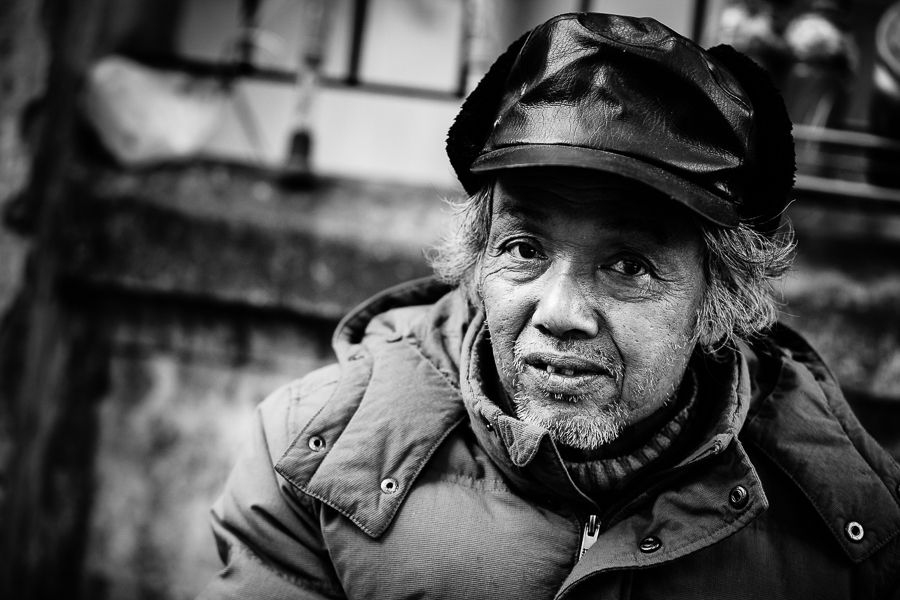
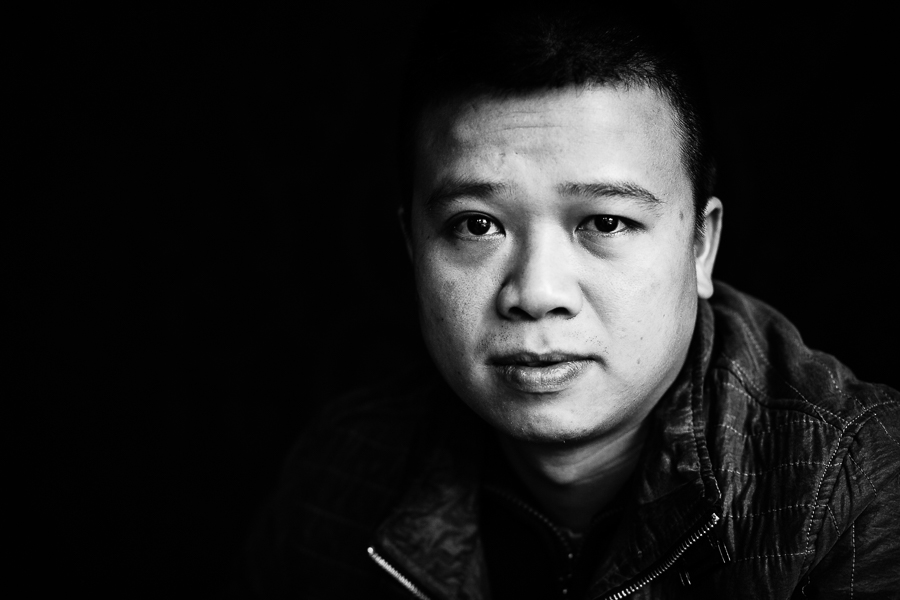
These two guys run little street-side tea stalls in different parts of Hanoi. The guy at the top was initially very reluctant to have his picture taken but eventually decided to humour me; the guy at the bottom, now making his second appearance on this blog, was a very willing model. He has a big, goofy smile, but I prefer this more serious shot.

Catch of the day

150128-003-edited-3

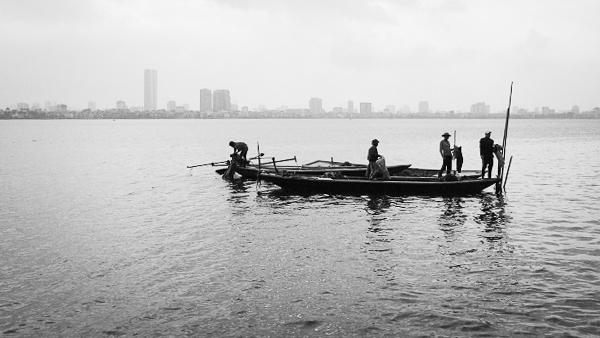
There’s a cafe round the corner from my house where I like to sit of an afternoon, nursing a ca phe den da (iced black coffee), gathering my thoughts, such as they are, reading a book, and gazing out at the lake. I was there this afternoon, before heading in to work to teach my evening class, as the fishermen came in from their afternoon’s work. I’ve seen this scene before but never had my camera with me to record it. I didn’t have my camera with me today either, so I used my crappy camera phone – which I might have to start using more often, as I’m quite pleased with how this came out.

Hanoi street portraits (#1)

hanoi-street-portrait-2

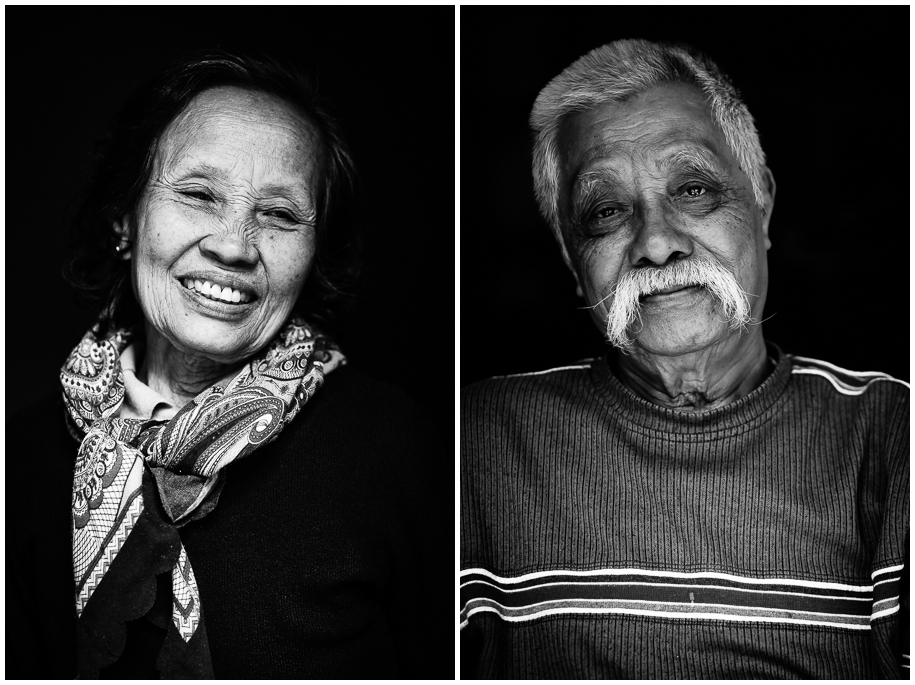
Over the last couple of weeks, I’ve been taking some simple, uncrowded, black and white portrait photographs in the streets near my home in Hanoi, using an 85mm lens. Having just used my 35mm lens for more than a year, it’s refreshing to be doing something a little different. My camera feels new again.

A year (and a bit) at 35mm

hanoi colour x9

(Hanoi, 2014-5)

Since I came back to Hanoi in September 2013, I’ve been shooting only with a 35mm prime lens. I wanted to test myself by limiting my camera to one focal length, 35mm, for an indefinite period of time. I like to set myself challenges or projects occasionally, whether it’s sticking to one lens for a particular trip, shooting in black and white for a while, or photographing a specific neighbourhood. It helps me to think about things in a different way and to take pictures that I otherwise wouldn’t have taken.

Having spent four months mostly using my zoom lens while travelling down the Mekong in the summer of 2013, I felt like it was time to do something different by the time I came back to Hanoi. I’m proud of the pictures that I took on that trip, and some of my favourites are environmental portraits, wide angle pictures that show a person in context. These pictures were often taken at around the 35mm mark on my zoom, and it was largely these pictures that prompted me to invest in a 35mm prime.

The 35mm is perfect for these environmental portraits, where you see a person in their everyday surroundings, such as a market stall or cafe. I’ve taken a lot of this sort of picture over the last year or so, as I’m always inclined to take portraits, whatever lens I’m using. When searching for this kind of picture, I’m not just looking for an interesting face, but also for a complementary background, one that either says something about the subject’s life or one that simply has an interesting colour or texture. With a 35mm lens, the image can be about the place, not just the face.

hanoi b&w x9

(Hanoi, 2013-4)

There’s plenty of not-very-interesting discussion online about what exactly constitutes a standard or normal lens, and which focal length most closely matches what the human eye sees. I don’t want to join this debate, but I will say that, for me, a 35mm lens on a full-frame SLR gives a very natural field of view. It’s wide, but not too wide; you can get close to your subject, and still include plenty of background, without any of the distortion that is sometimes produced by wider lenses. It’s also a very versatile lens, good for photographing street scenes, details and patterns, as well as the portraits that I most like to take.

From a practical point of view, the 35mm – or any other physically small prime – is well-suited to city shooting. I love to take street portraits in Hanoi, and I always try to engage a little with the people I photograph; I like to get physically close to the person whose portrait I’m taking, without invading their personal space. While my standard zoom lens, a big, serious-looking 24-70mm, can be quite intimidating for the person at the other end, the 35mm is smaller and friendlier. This is especially useful in Hanoi, where people are often understandably wary of camera-wielding strangers.

bangkok x9

(Bangkok, February 2014)

I don’t often write about the technical or practical side of photography on here, as I prefer to show the pictures themselves, rather than dwell on the processes behind them. This site isn’t intended to be a “how to” site; the last thing the internet needs is another self-appointed photography expert. I’ve also deliberately avoided mentioning specific brands and models in this post, as it’s certainly not intended to be a product review; but for the benefit of those who are interested (and I know that I’m always interested in what cameras and lenses other people are using), these pictures were all taken with a Canon EF 35mm f/2 IS USM lens on a Canon 5D mk I.

Now it’s time to move on. Over the last week or so, I’ve started using my 85mm lens again, to take some tightly framed head and shoulders portraits (coming soon to the blog), and next month I’ll be taking my standard zoom with me when I go away for the Tet holiday. I stuck with my self-imposed 35mm challenge for a lot longer than I expected, and it’s been a rewarding experience, but now it’s time for a change.

Downriver

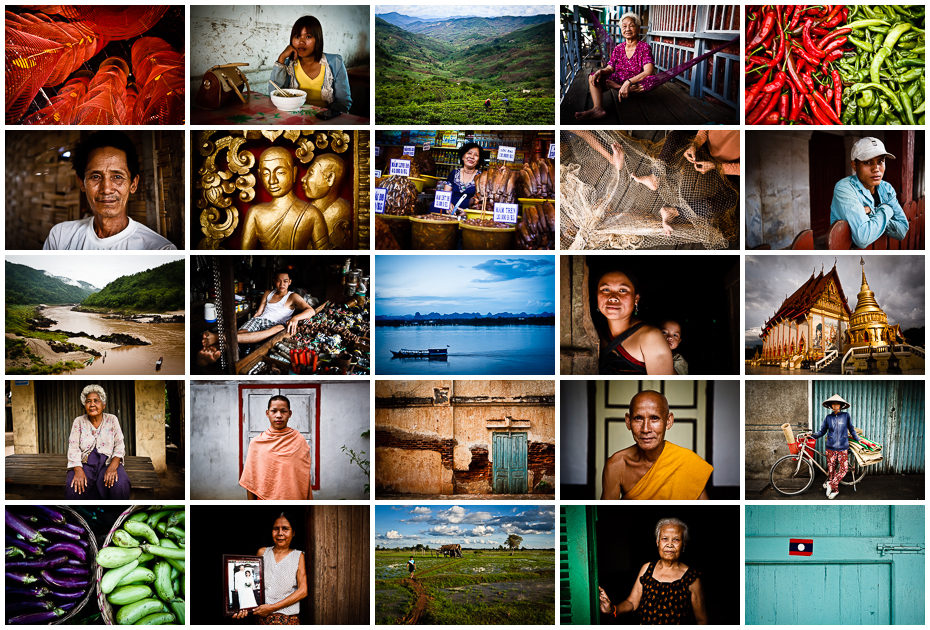
downriver collage

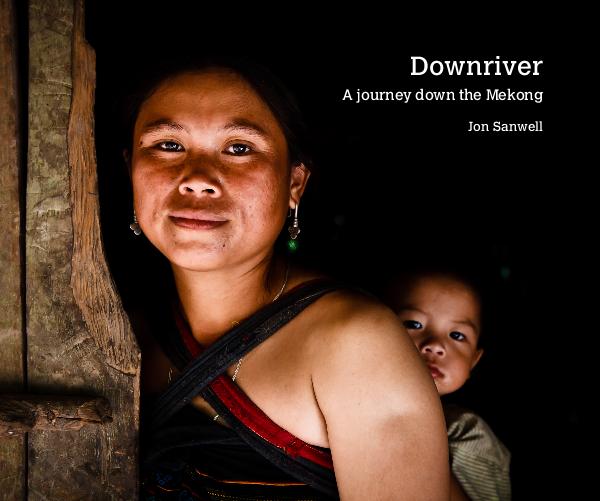
My photobook, Downriver, is still available through blurb.co.uk.

In the summer of 2013, I spent four months following the Mekong river through south-east Asia. From the Xishuangbanna region in China’s Yunnan province, I travelled into northern Laos, crossed the river for a brief visit to Thailand, then continued down through the southern tail of Laos and into eastern Cambodia, before finishing my journey in the Mekong delta region in southern Vietnam. The book is a collection of my photographs and thoughts from the trip.

The 136 page book is available as an 8×10 in softcover book or as a PDF download. Click here to order or to see a limited preview.

downriver