Without an H

Photography from south-east Asia by Jon Sanwell

Posts tagged ‘market’

On solid ground

130828-232-edited

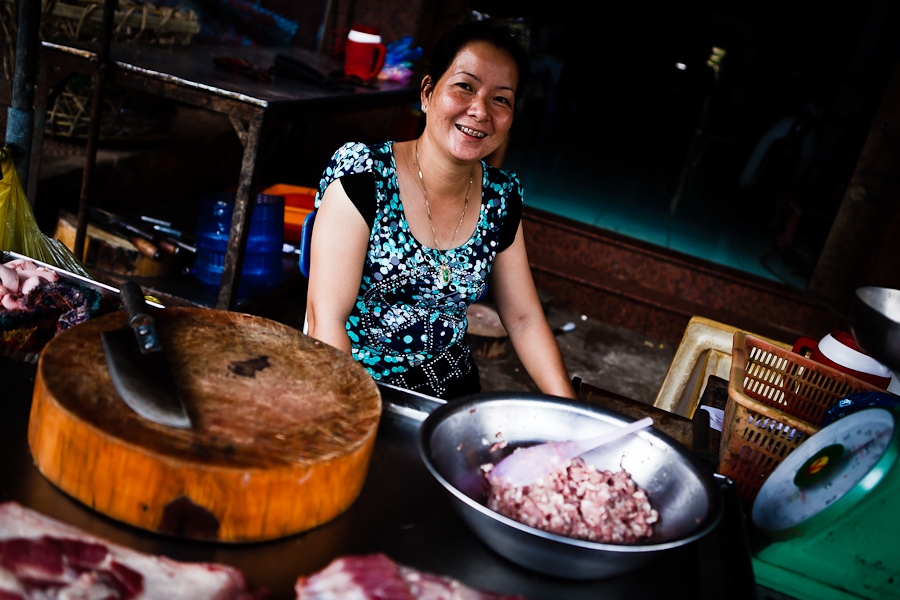
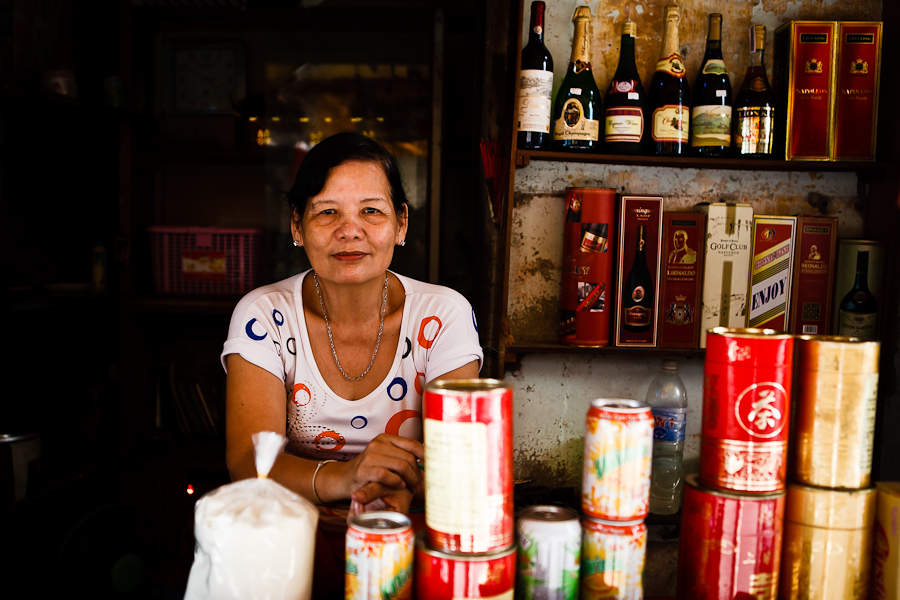
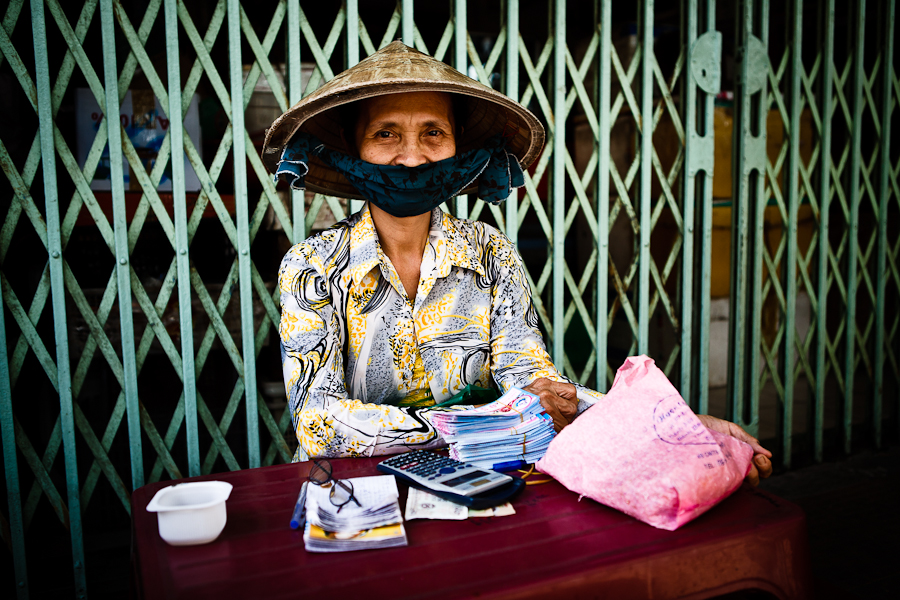
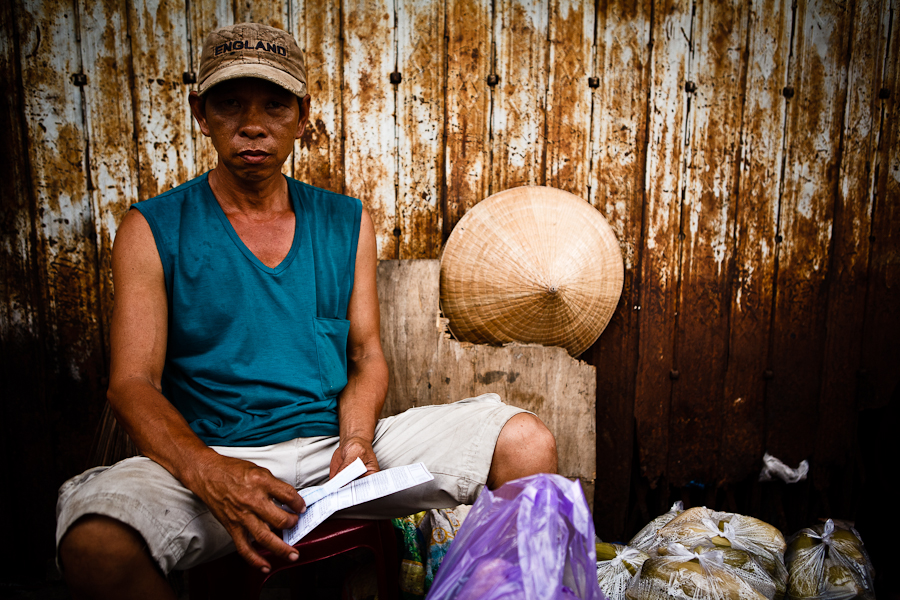
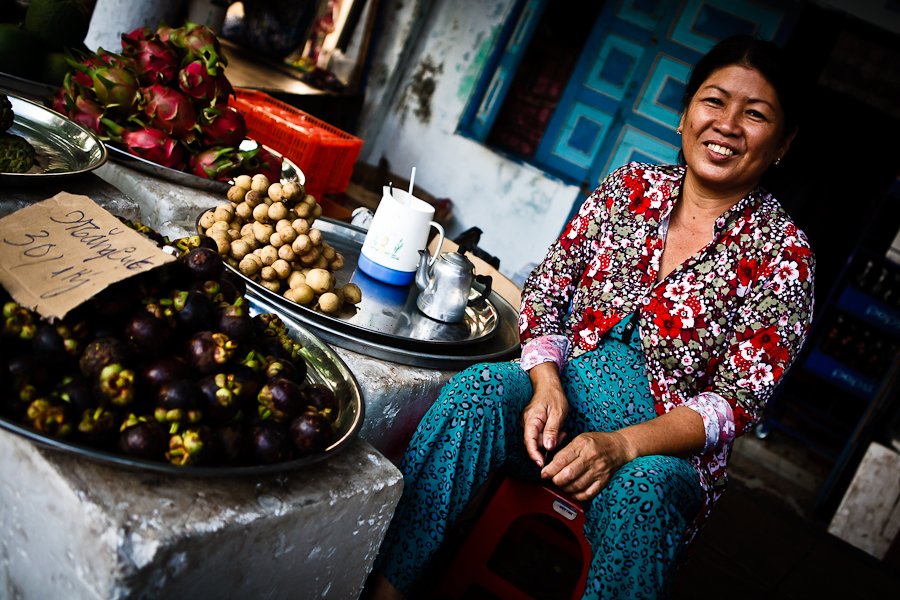
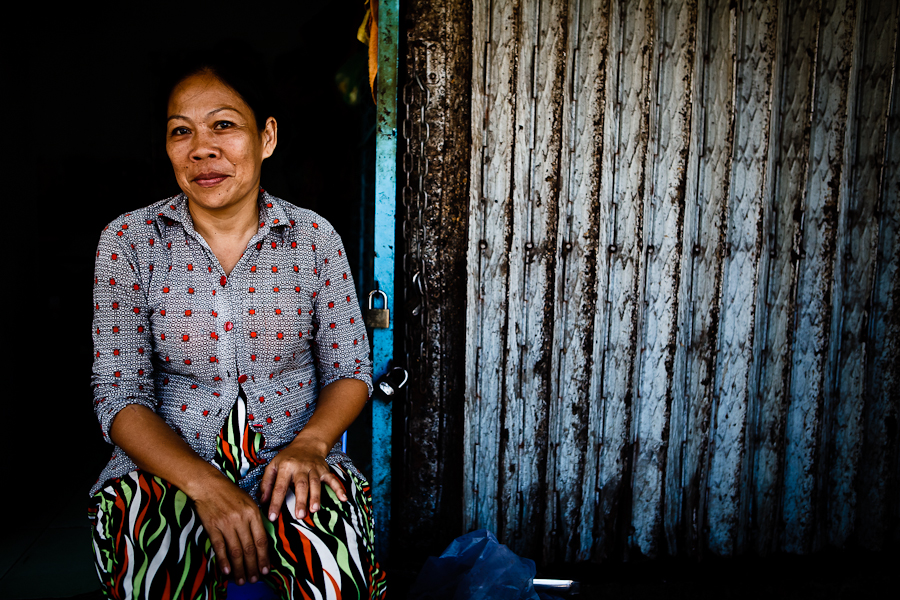
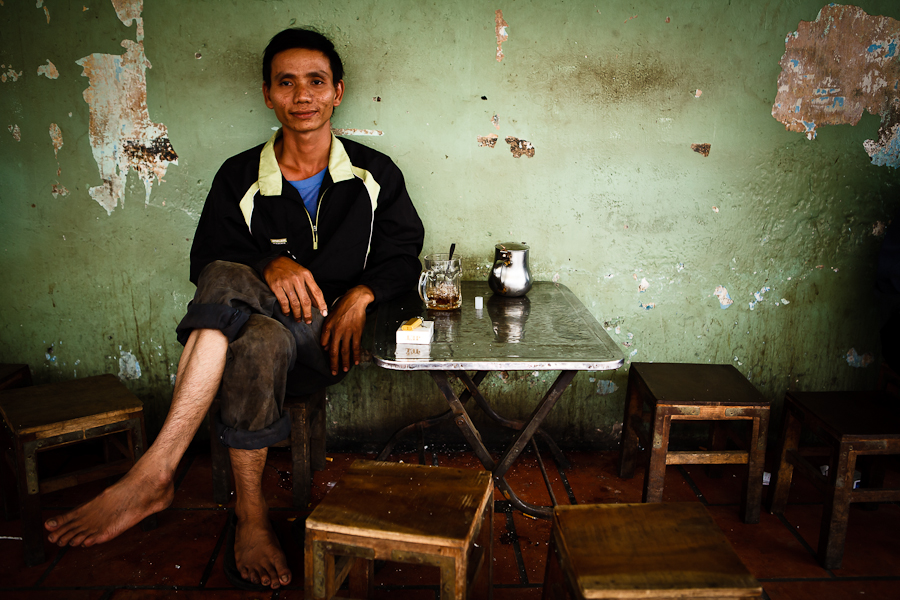
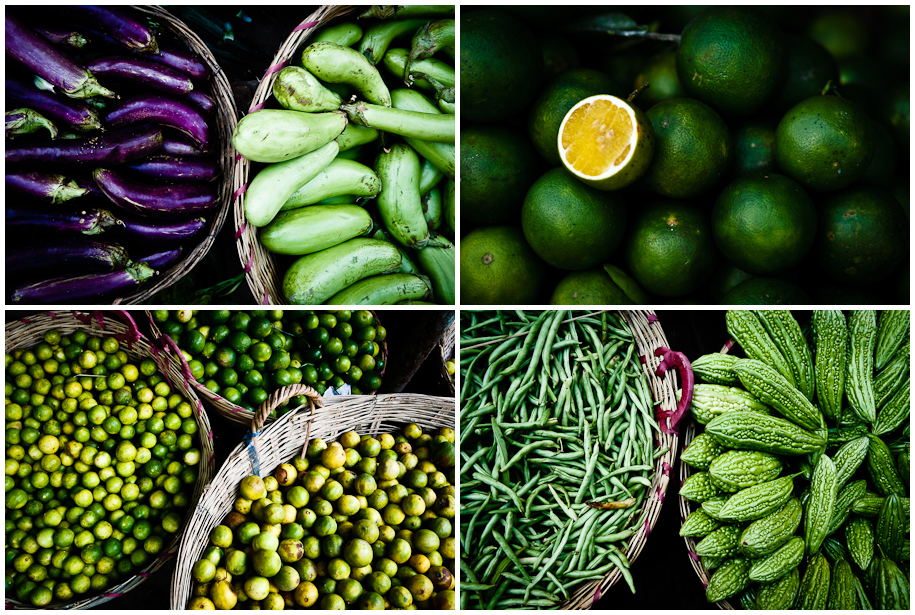
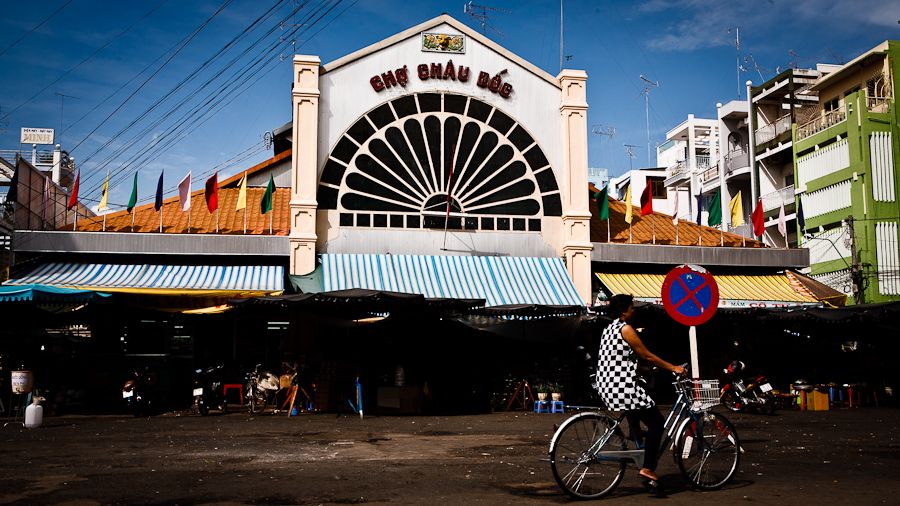
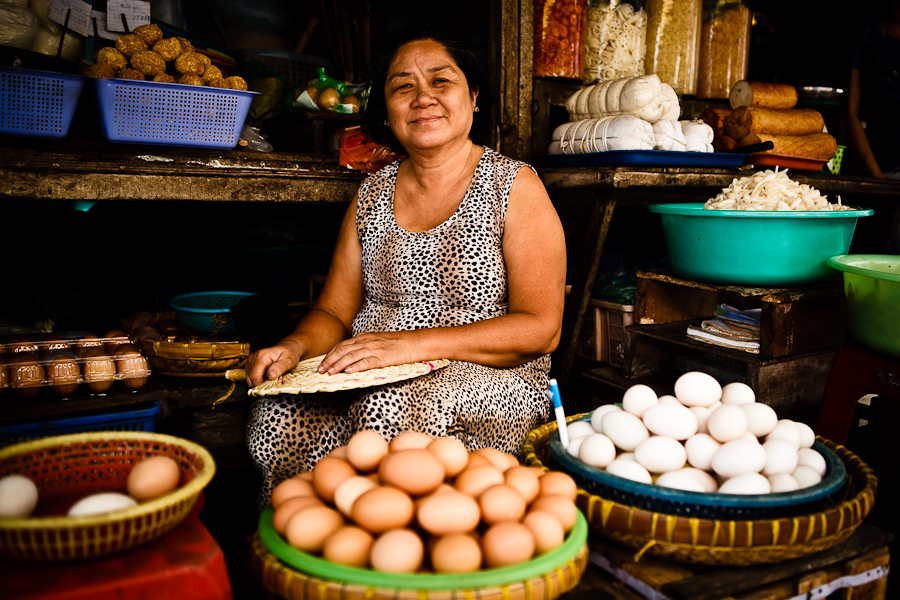
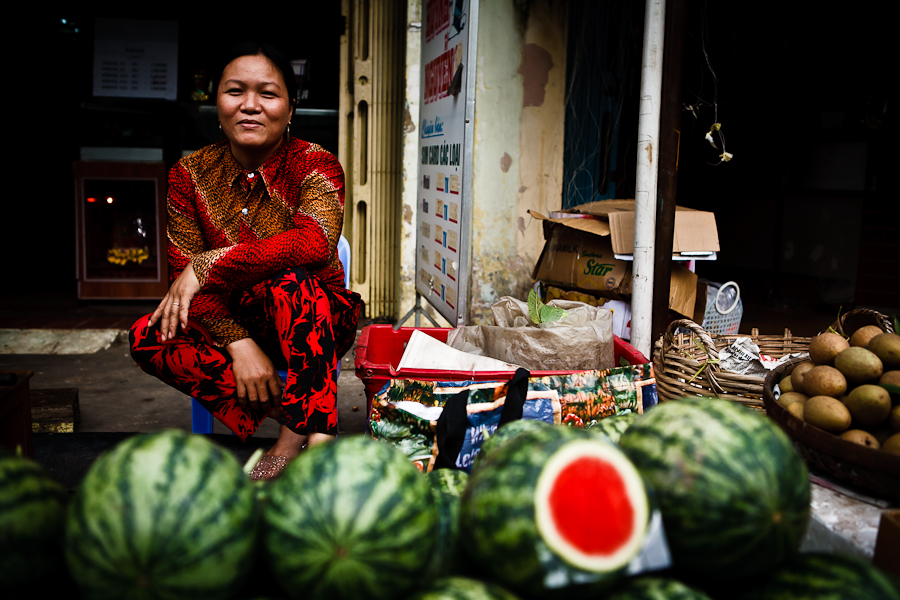
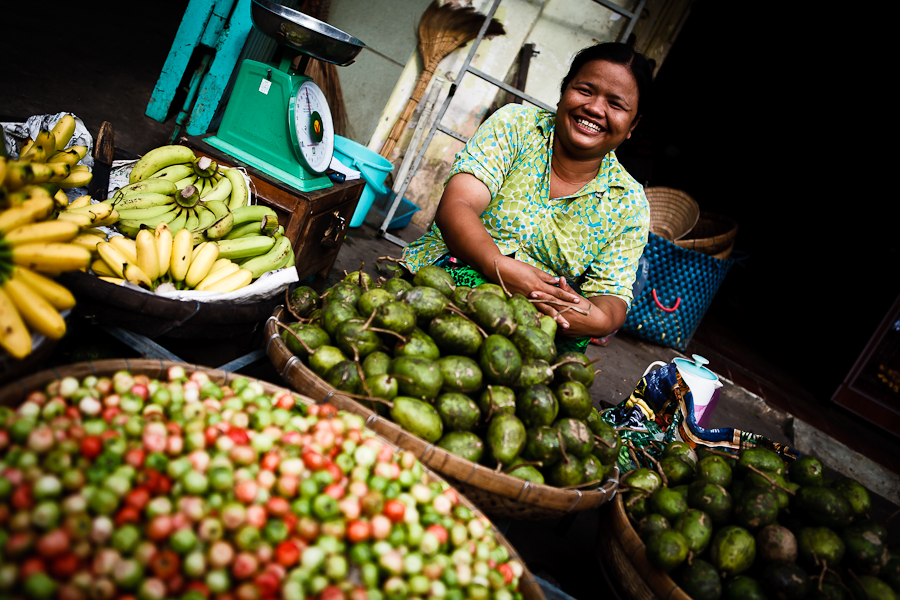
If I could only take pictures in one kind of location, it would be the streets and markets of Vietnam. Can Tho, the main city of the Mekong delta, is best known for the nearby floating markets, but the dry land city streets are where I found the pictures that I like the most. While I enjoyed the experience of visiting the floating markets by boat, I didn’t come back from those trips with the pictures that I wanted. Maybe I’m just more comfortable with solid ground beneath my feet, being able to move where I want, rather than having to make the best of the boat’s position.

I spent a fair amount of time in Can Tho relaxing on the waterfront, watched over by a giant statue of Uncle Ho, but found time in the early mornings and late afternoons to wander the nearby side-streets and markets.  I seem to have been particularly drawn to strong reds, greens and blues during my stay. The original old market building now houses a riverfront restaurant and assorted souvenir stalls, so the market for fresh meat, fish, fruit and vegetables has spilled out onto the adjacent streets.
130828-240-edited

130817-001-edited

130828-277-edited

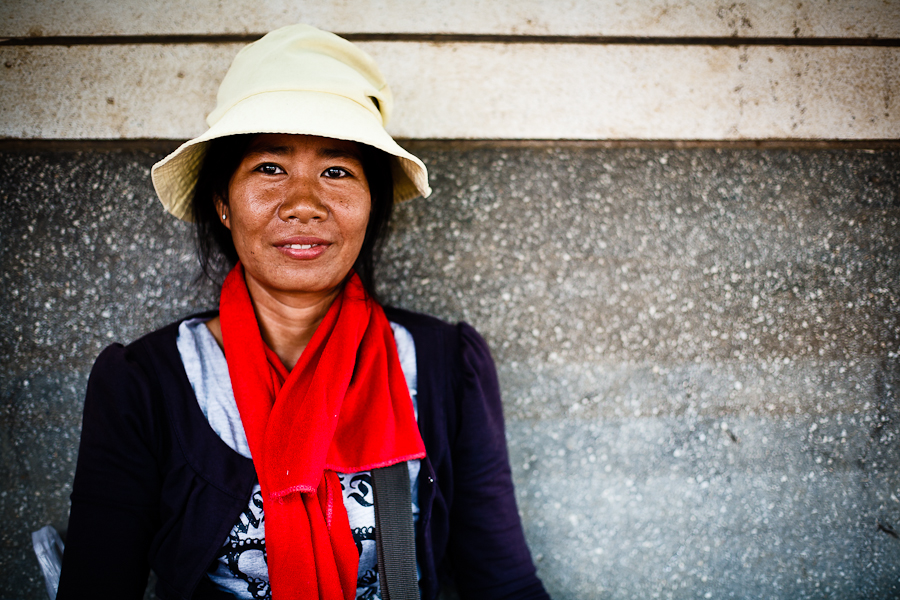
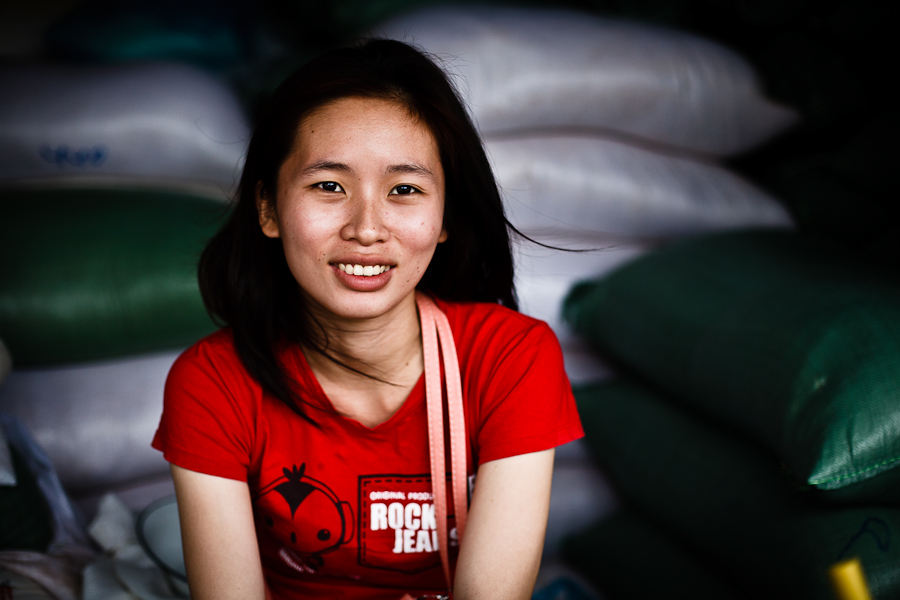
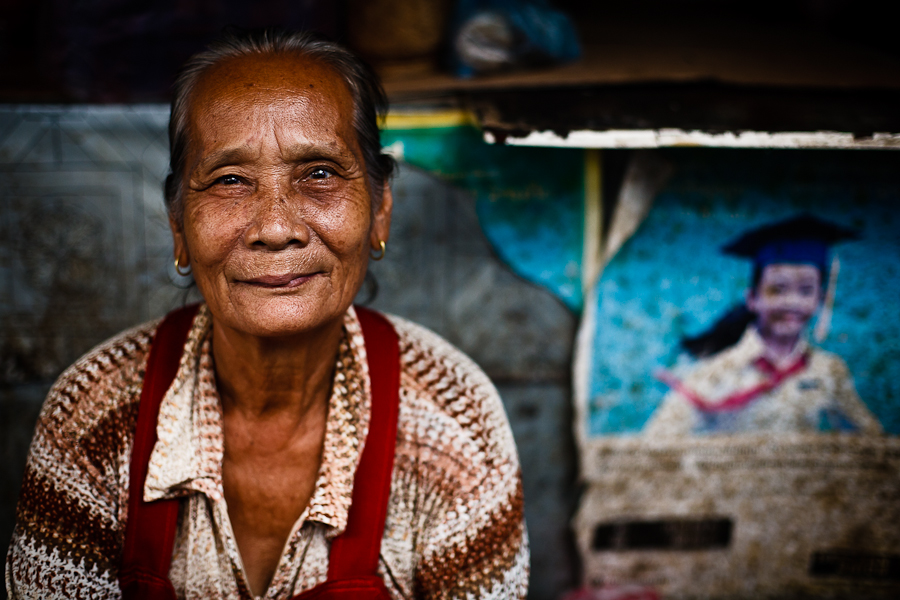
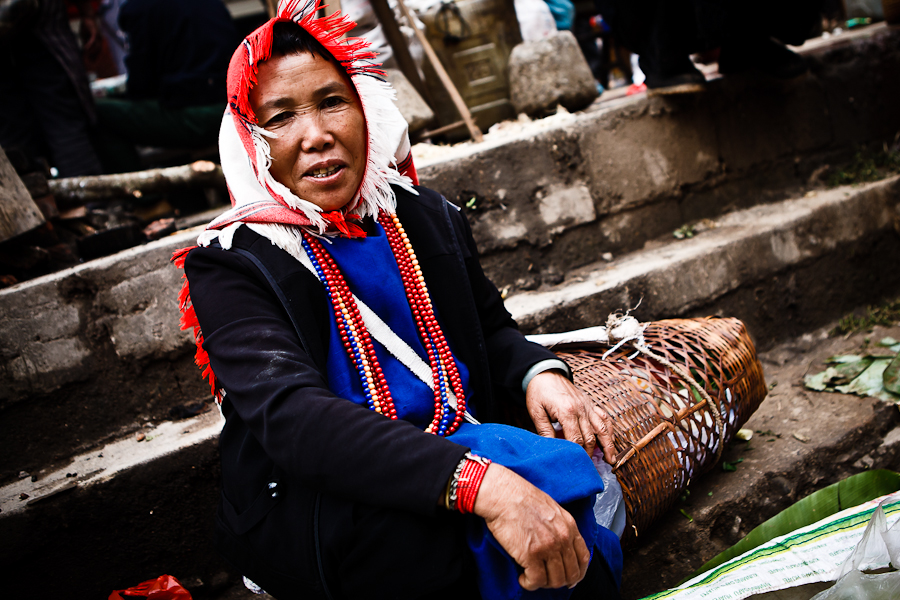
can-tho-market-portraits

130816-118-edited

130817-012-edited

130828-314-edited

130830-138-edited

130817-032-edited

130828-176-edited

Related posts:

Rambutans are not the only fruit

130823-209-edited

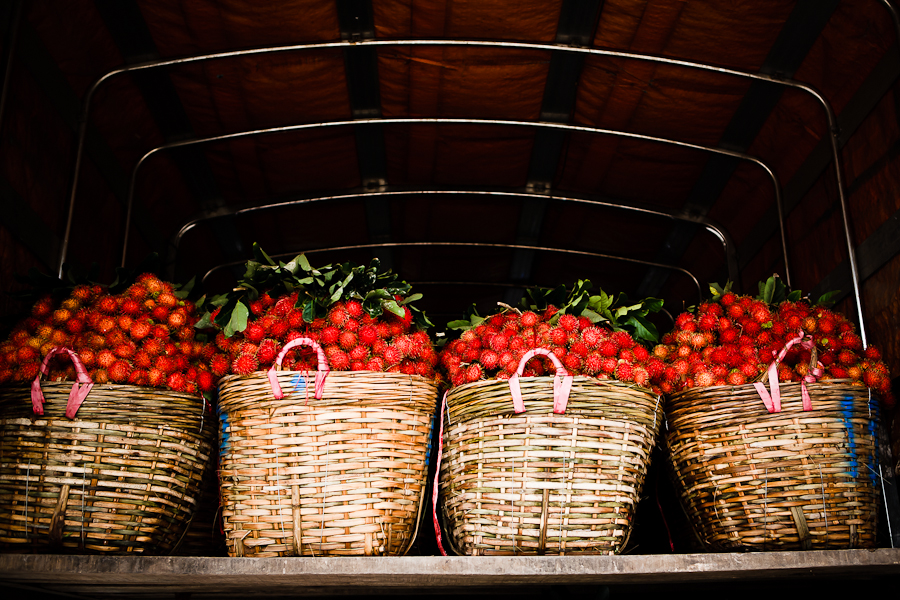
… but they might be the most photogenic. I got a little obsessed with the little hairy blighters while in Vinh Long, the rambutan capital of Vietnam (probably).

Oh, and they taste nice as well, very much like lychees.

[And apologies to email subscribers who received a draft version of this post without any pictures in it.]

130823-223-edited

130823-232-edited

130823-236-edited

130823-241-edited

130819-040-edited

130819-045-edited

130819-049-edited

Streets of Chau Doc

130804-239-edited

Don’t tell everyone, but Chau Doc is one of the finest places in Vietnam. Near the Cambodian border, it’s a riverside market town with a mix of Vietnamese, Khmer and Cham people. The buzz about the town is recognisably Vietnamese, but is tempered by a distinctly Cambodian laidbackness.

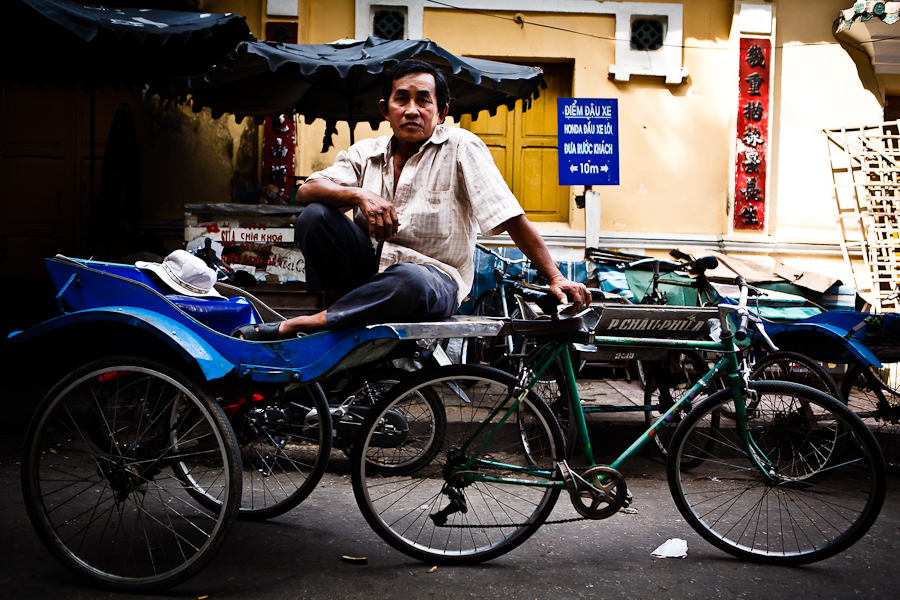
You can taste the blend of cultures in the food. The town’s signature dish, bun ca (a fish noodle broth, sold in Saigon as bun ca Chau Doc) is Vietnamese street food with a Cambodian twist. I ate some every day. Cyclos are a common sight and, unlike in Ho Chi Minh City and Hanoi, where they are now mainly the preserve of newly arrived tour groups, in Chau Doc they are commonly used by local people as a way of getting from A to B.
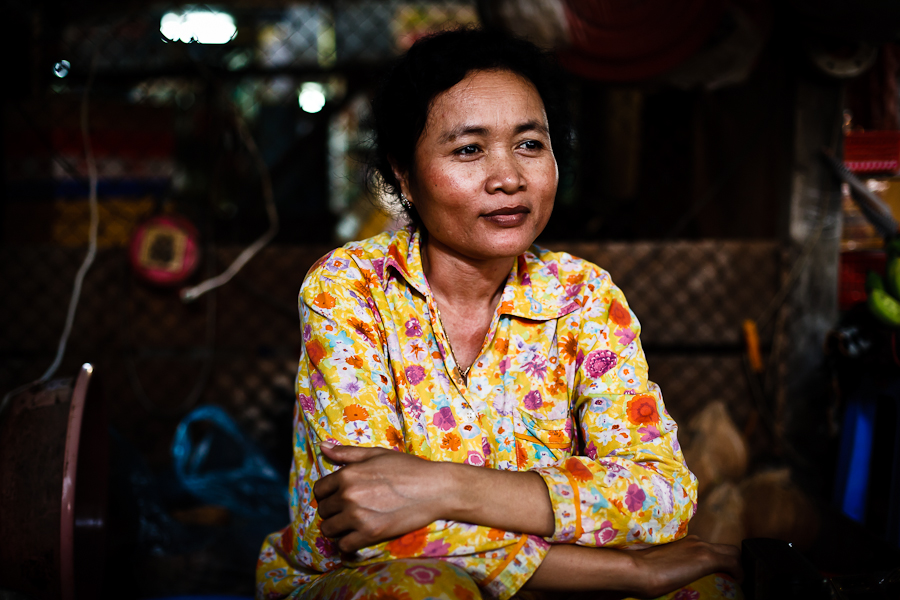
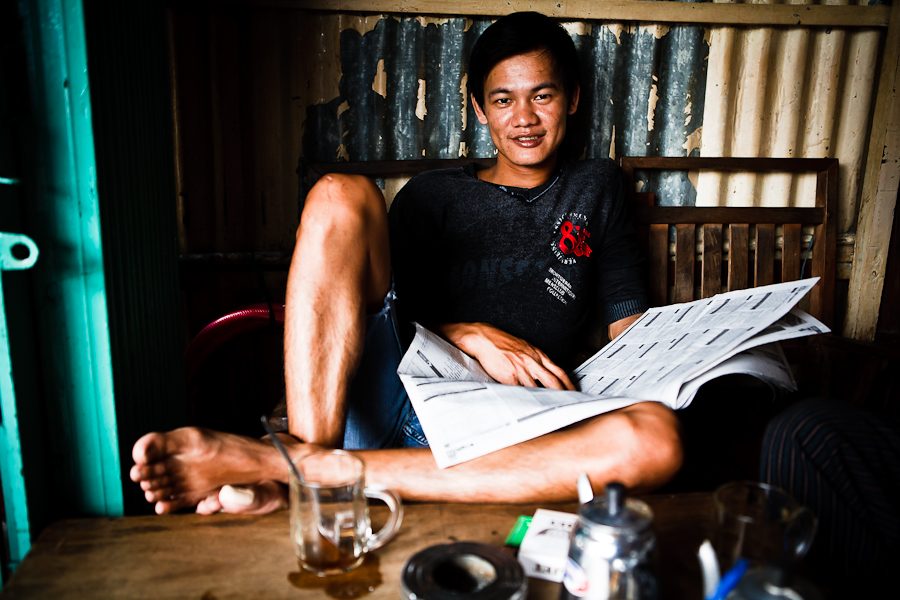
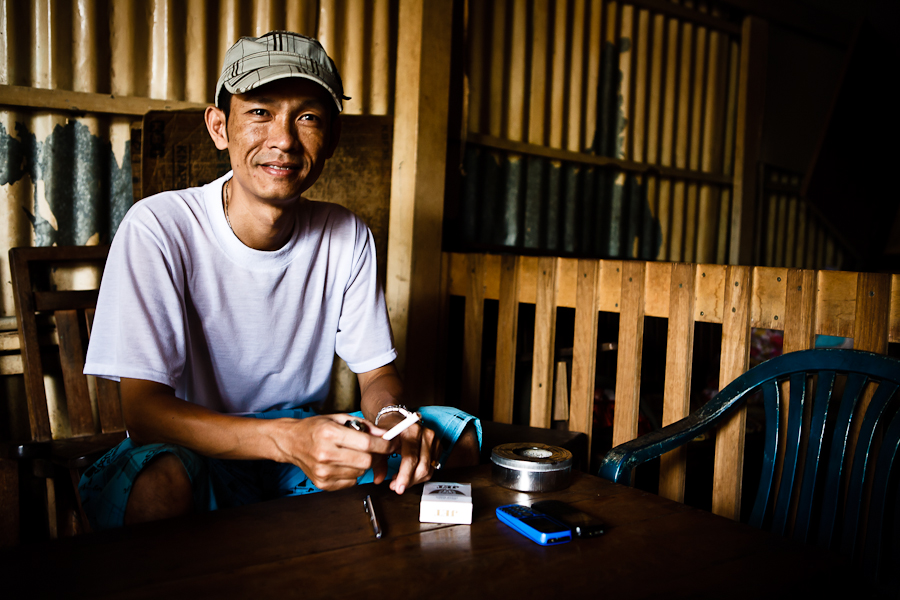
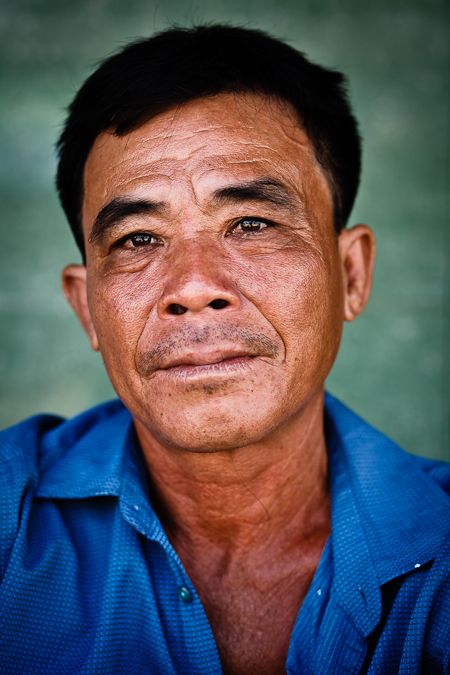
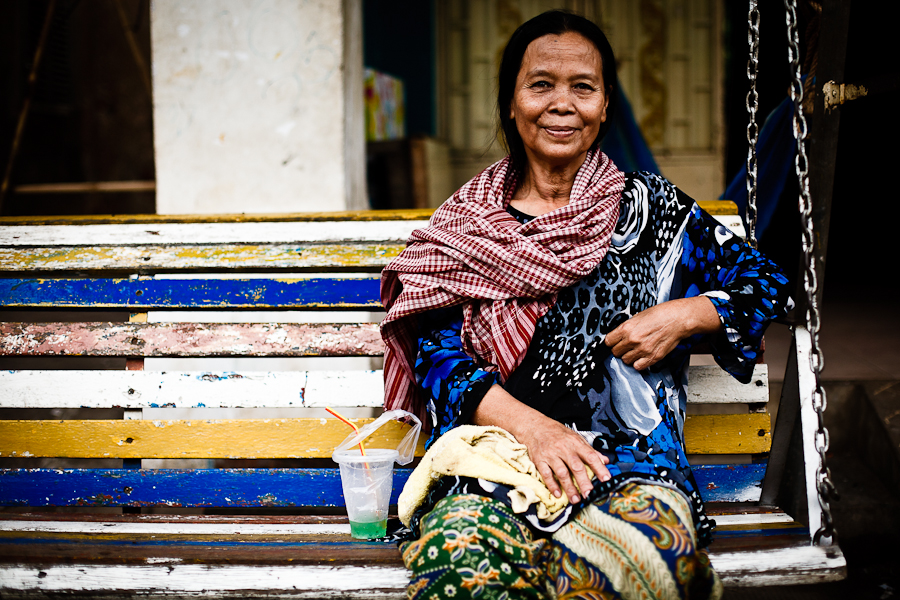
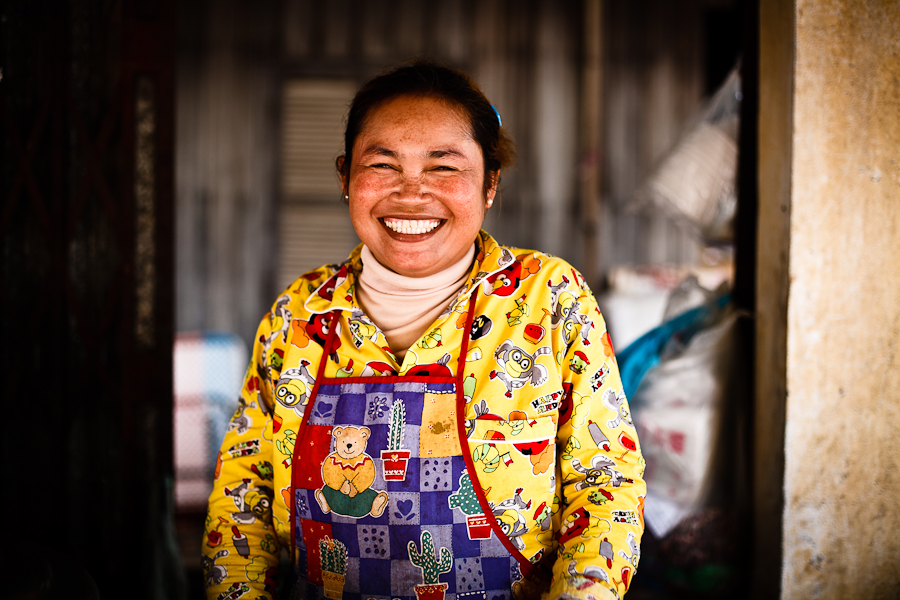
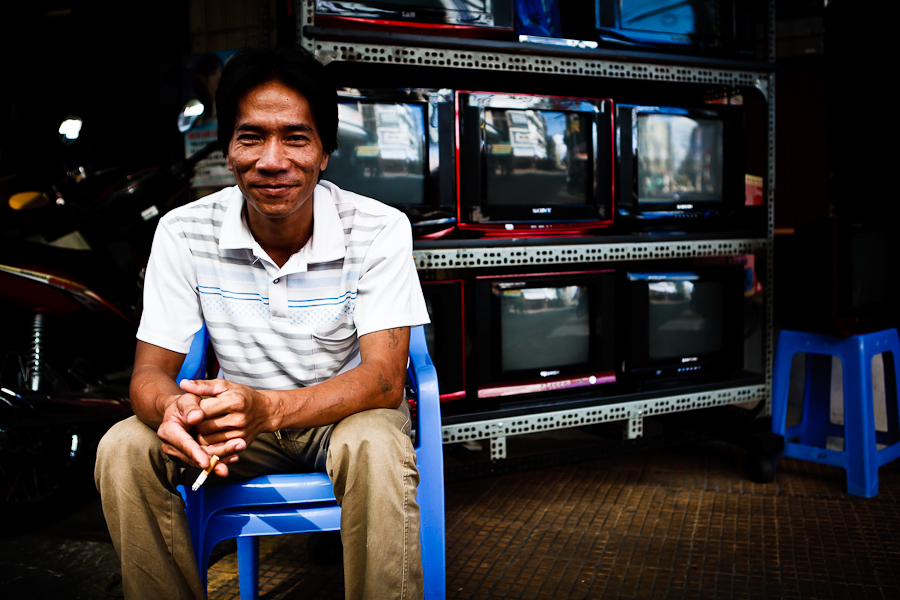
In some places, you have to work quite hard to get people pictures, but not in Chau Doc, where the people are some of the warmest and most hospitable that I’ve come across. I’ll be posting some more pictures soon; this first post concentrates on the people in the market and on the streets.

130804-260-edited

130805-086-edited

130806-144-edited

130804-574-edited

130805-202-edited

130805-131-edited

130804-370-edited

130804-587-edited

130804-412-edited

130805-016-edited

130804-105-edited

Related posts:

Back in Kompong Cham

130720-008-edited

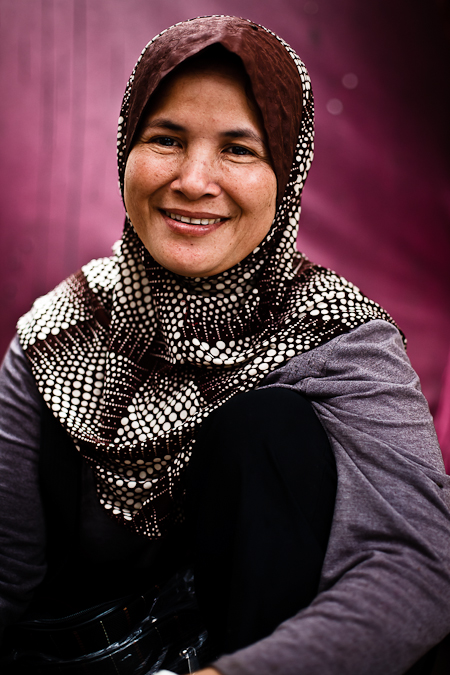
When I first visited Kompong Cham, in January 2012, the weather was hot and dry, and the ramshackle bamboo bridge connected the town with Koh Paen island in the middle of the Mekong.  This time around, the weather was hot and wet, and the bridge had been washed away by the rising river water, to be rebuilt again once the rain has abated later in the year.  Some things hadn’t changed though.  Like Kratie, my previous stop, the town still has a low-key charm, thanks mainly to its warm and generous people.  One of the women featured in this post (the last but one picture, a Cham muslim woman photographed in the covered fish market) I also have a picture of from my first visit.

The wet weather meant that I didn’t get out and about as much as I would have liked, so these pictures are all from the market and the town centre.

130720-029-edited 130721-009-edited 130721-020-edited

130723-037-edited

130722-006-edited 130721-055-edited130723-041-edited

130720-017-edited

130724-060-edited 130724-030-edited 130723-049-edited

Related posts:

Back in Kratie

130717-008-edited

When I first visited Kratie, in January last year, the place looked very different.  A fire had recently destroyed the town’s market so the traders had had to set up temporary stalls along the riverfront.  Now, the market has been rebuilt and is thriving again, and the view of the Mekong from the town is happily unobscured.  I had good memories of Kratie from my first visit – I kept recalling meals I’d eaten there, pictures I’d taken, the book I was reading – so I was pleased to see that the town had been revived.  On top of that, it was also good to be somewhere familiar again, for the first time since leaving Vientiane a few weeks earlier.

My previous visit was part of a trip I took during the Tet holiday 2012, when I travelled from Saigon, through the Mekong delta, and into eastern Cambodia:  my Mini Mekong Trip, as I now think of it.   At the time, I wrote about how one day I wanted to go on a longer Mekong journey, following the river from southern China to the delta in Vietnam.  And this is what I’ve been doing for the last couple of months: my Big Mekong Trip, now sadly nearer its end than its beginning.

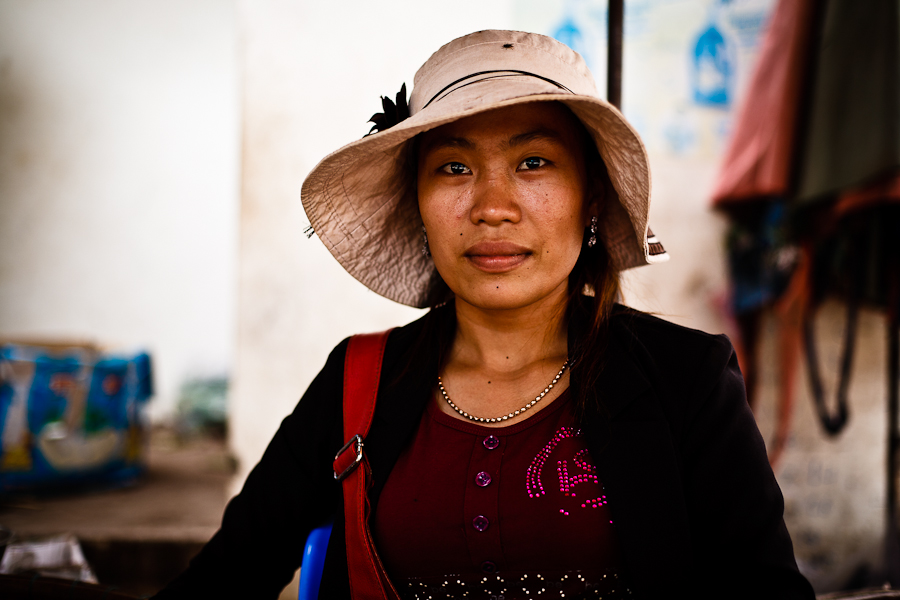
I’ve mostly been using my standard zoom lens on this trip, but in Kratie’s streets, I brought out my 50mm.  I wanted to get some simple portraits and detail shots.  I love taking people pictures with my 50mm lens; it makes you get close to people but still allows your subjects some room to breathe.

130716-009-edited

130716-028-edited

130716-032-edited

130716-046-edited

130716-078-edited

130716-080-edited

130716-088-edited

130716-106-edited

130717-017-edited

130717-025-edited

130717-032-edited

Related posts:

Capital

130622-022-edited

I knew that travelling in south-east Asia in the wet season would be awkward at times, and that was certainly the case for the few days I spent in and around Vientiane. The capital city of Laos, not the most picturesque place to begin with, wasn’t done any favours by the rain. It wasn’t even dramatic-tropical-downpour rain, but persistent-drizzle-under-grey-skies rain, the kind of rain I left England to get away from.

Vientiane looks and feels very different to other places in northern Laos. The French influence is much more apparent, in the street names, food, architecture and general ambience. It hardly rivals Paris or London as one of the great capitals of the world, but it’s still a city, albeit a small, low-key one, and that makes it distinctly different to Luang Prabang or Luang Namtha.

Above and below are views of and from Patuxai, Vientiane’s Arc de Triomphe.

130622-033-edited

Wat Sisaket is home to hundreds of buddhas, big and small.

130622-055-edited 130622-061-edited 130622-073-edited 130622-092-edited

Khou Din market seems to have escaped the mallification, if that’s a word, which has made nearby Talat Sao market not very interesting.

130624-030-edited 130624-042-edited 130624-051-edited

130624-046-edited

Xiding market

130530-030-edited

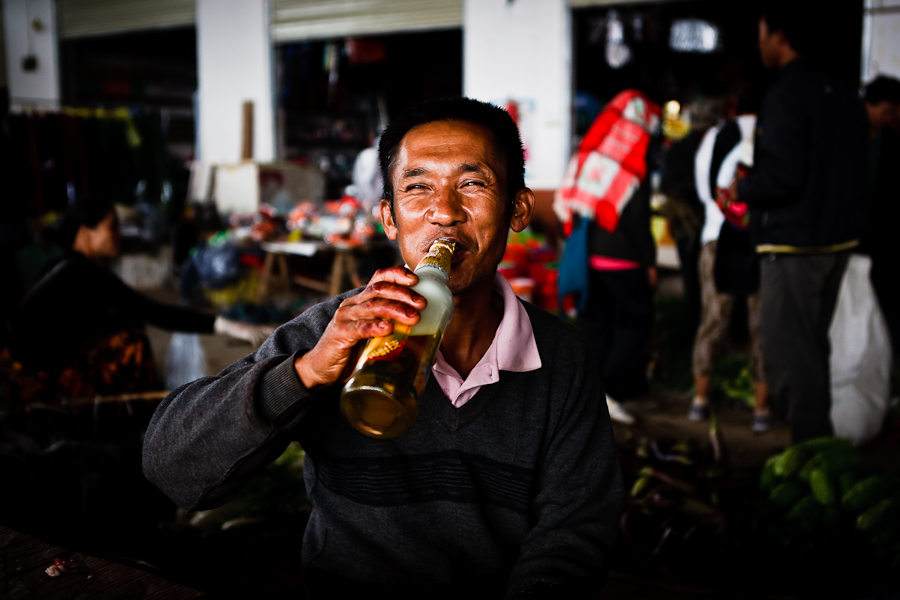
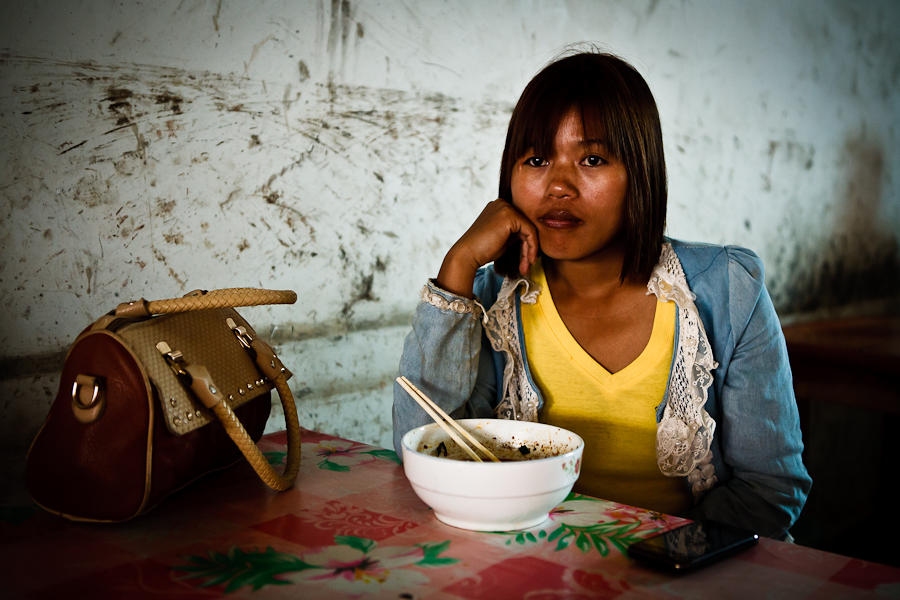
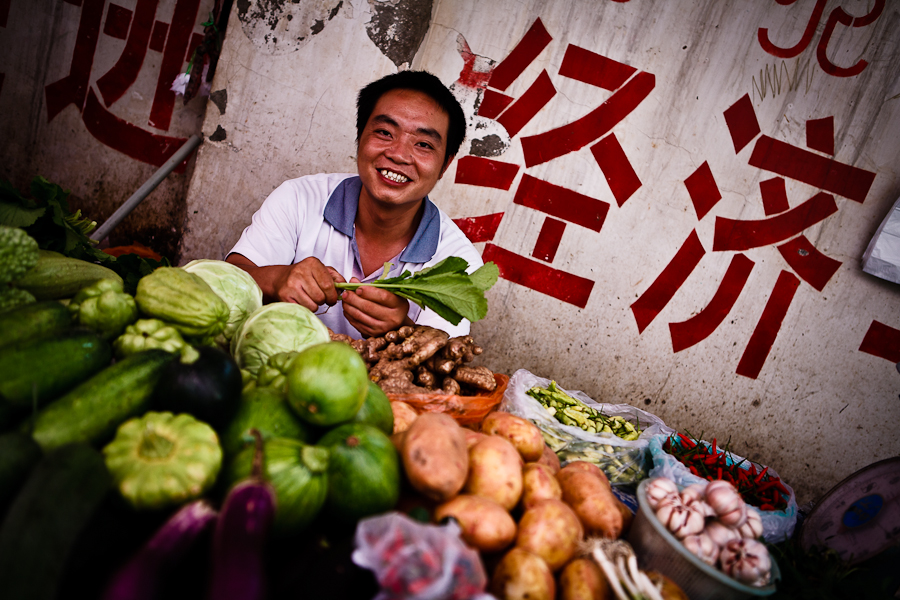
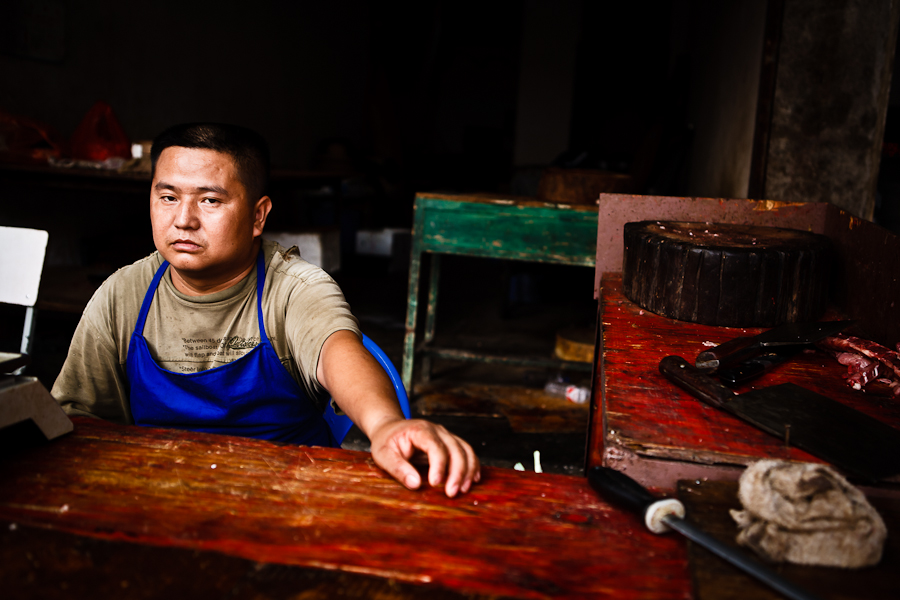
Xiding market, a couple of hours’ drive from Jinghong, near the border with Burma / Myanmar, early on a Thursday morning.  It’s a family affair.

130530-046-edited

china-xiding-market-7

The women do the hard work, while the men concentrate on the serious business of early morning boozing.

130530-036-edited

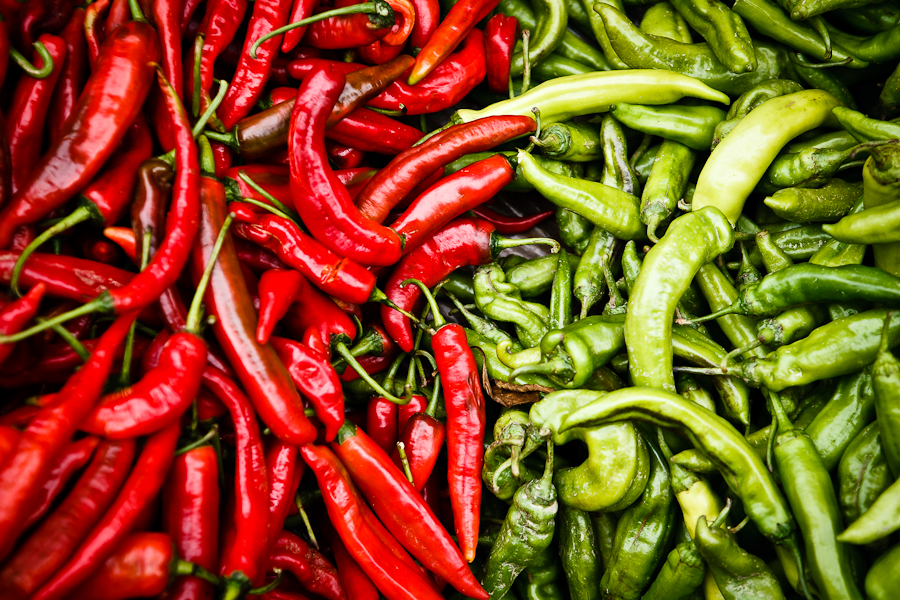
I wish that I’d included the market trader’s hands in this shot, to give a sense of scale. These chillies were enormous.

130530-079-edited

130530-089-edited

130530-157-edited

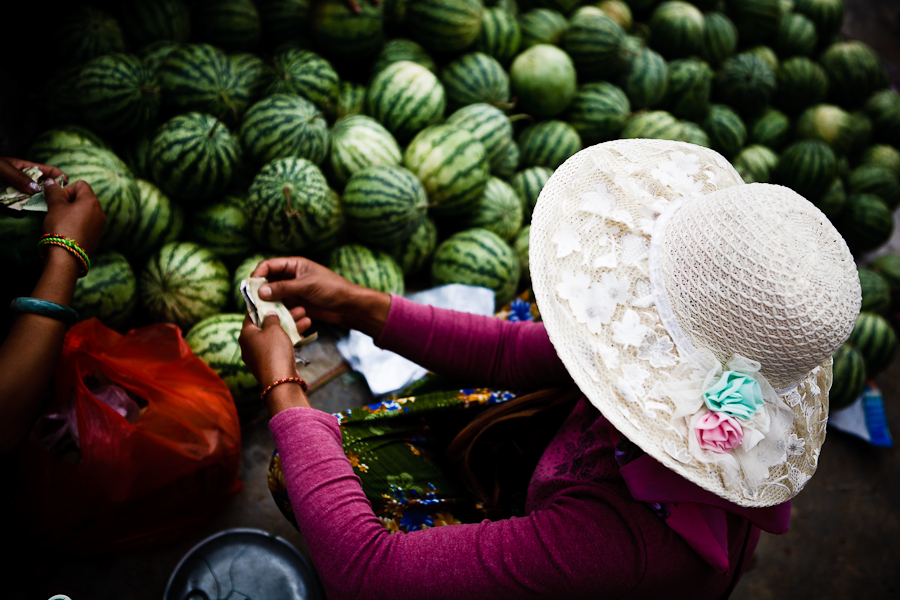
I’m too fashion-illiterate to know the name for these hats, but they’re a popular look among the market ladies of Xishuangbanna.

Border country: Xishuangbanna

130527-001-edited

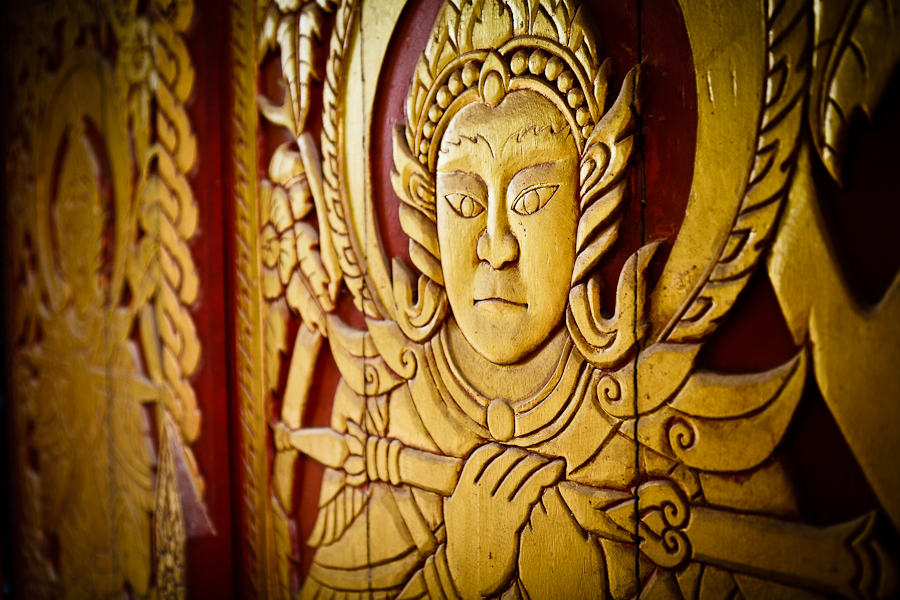
Sometimes it seemed like China was disguising itself as other countries.  Yuanyang reminded me of northern Vietnam, while in Xishuangbanna, it often seemed like I had already travelled into Laos.  It’s border country.  Jinghong, the region’s small main city, is only a few hours drive from both Laos and Burma.  Thailand is not so far away either and exerts a strong cultural influence.  Eating a Thai red curry and drinking a Beerlao on my second night in town, I had to remind myself what country I was in.  It wasn’t the only time.  Jinghong has a distinctly south-east Asian feel: the people are relaxed and friendly, the food is spicy, the temples wouldn’t be out of place in Luang Prabang, and elephant imagery is everywhere.

Jinghong is also where my Mekong journey really got started, as it’s where I joined the river, known in China as the Lancang.  My friend Chris would argue that this is a pretty half-hearted Mekong trip, since I’m not travelling all the way down from the river’s source in Tibet in a canoe that I fashioned myself from bamboo and recycled plastic.  But starting in Jinghong a) is easier and b) gives me the chance to spend plenty of time in the places where I stop, rather than rushing from one town to the next.  I was able to spend about a week in the border country of Xishuangbanna, without feeling rushed or hurried.  As I say, very south-east Asian.

130527-093-edited

130524-014-edited

130524-020-edited

130524-042-edited

130524-179-edited

130525-002-edited

130527-103-edited